Introduction to Braille in Religious Texts
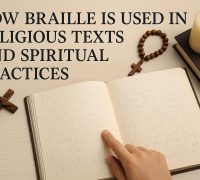
Braille plays an essential role in making religious texts accessible to visually impaired individuals. Developed by Louis Braille in the early 19th century, this tactile writing system enables readers to perceive text through touch. Religious organizations worldwide have embraced Braille, ensuring that sacred scriptures and spiritual literature are available to all followers. This article explores how Braille is used in various religious texts and spiritual practices.
Braille and Christianity
Christianity has a long tradition of translating the Bible into Braille. Organizations such as the American Bible Society and the National Library Service for the Blind and Print Disabled have contributed to producing Braille versions of the Bible. These texts are crucial in allowing visually impaired Christians to engage with scripture independently. Various denominations also offer prayer books, hymnals, and study materials in Braille.
Biblical Studies and Devotional Practices
For visually impaired Christians, Braille provides access not only to the Bible but also to commentaries and Bible study materials. These resources facilitate personal and group studies, enriching spiritual understanding. Additionally, many churches offer Braille versions of their bulletins and announcements, allowing congregants to participate fully in services and community life. The incorporation of Braille into church activities and educational materials enables a more inclusive experience, ensuring that visually impaired individuals can participate in religious discussions and devotions with ease.
Braille plays an instrumental role in the everyday life of a visually impaired Christian believer, allowing them to maintain a personal connection with their faith through daily readings and prayer. The availability of Braille scriptures has empowered individuals to deepen their theological knowledge and maintain active membership in their religious communities, fostering spiritual growth and community integration.
Braille in Islam
In Islam, the Quran is the central religious text, and its accessibility is of utmost importance. Numerous organizations have worked to create Braille versions of the Quran to ensure that visually impaired Muslims can read and memorize the holy scripture. Countries such as Saudi Arabia and Egypt have made significant efforts to produce and distribute Braille Qurans globally.
Supporting Memorization and Recitation
For Muslims, the ability to memorize and recite Quranic verses is an integral aspect of spiritual practice. Braille facilitates this process, enabling individuals to learn, recite, and internalize the Quran’s teachings. In some regions, Islamic schools offer instruction in Braille, supporting visually impaired students in their religious education. The tactile nature of Braille makes it an effective learning tool, helping students engage with the text and gain a deeper understanding of the principles within the Quran.
Furthermore, various charitable organizations and governmental initiatives have been launched to ensure Braille translations are widely available in mosques and educational institutions. These efforts signify the importance of accessibility in preserving the tradition of Quranic memorization and promoting religious education among visually impaired individuals.
Hinduism and Braille
Efforts to make Hindu scriptures available in Braille have been gaining momentum. Sacred texts such as the Bhagavad Gita and the Vedas are being transcribed into Braille, allowing visually impaired practitioners to explore Hindu philosophy and spiritual teachings independently.
Access to Devotional Literature
Beyond scriptures, there is a growing availability of devotional literature in Braille. This includes books of prayers, hymns, and other spiritual writings that are essential for daily worship and personal reflection. Programs within certain temples and organizations focus on producing and distributing these materials. The movement towards making Hindu texts available in Braille reflects a broader commitment to inclusivity within the community.
Temples and Hindu organizations are taking significant steps to ensure that all members of their communities, regardless of visual ability, have equal opportunities to engage in religious activities. Braille materials are often integrated into temple services, providing visually impaired individuals with full access to rituals, chants, and learning opportunities. This holistic approach to accessibility enhances both individual spiritual growth and communal participation.
Buddhism and Braille Scriptures
Buddhist communities have been proactive in making texts like the Dhammapada and various sutras available in Braille. These texts are vital for study and meditation, aiding practitioners in understanding the teachings of Buddha.
Inclusive Meditation Practices
For visually impaired Buddhists, access to Braille scriptures supports meditation practices by facilitating deep engagement with the texts. Many Buddhist centers now offer resources and study sessions specifically designed for visually impaired individuals, contributing to a more inclusive spiritual environment. Regular study sessions, led by knowledgeable instructors, create opportunities for visually impaired practitioners to delve into Buddhist teachings, fostering a supportive learning environment that encourages spiritual contemplation and growth.
Buddhist communities recognize the need for accessible spiritual resources. The distribution of Braille materials ensures that all individuals, regardless of their visual ability, can engage fully with Buddhist teachings and participate in meditation and mindfulness practices, which are core components of Buddhist spirituality.
Conclusion
The use of Braille in religious texts is invaluable in fostering inclusivity and enriching the spiritual lives of visually impaired individuals. By making sacred scriptures and devotional materials more accessible, religious communities worldwide are ensuring that all followers can participate fully in their spiritual journeys. For further exploration of this topic, various organizations offer resources and support for individuals interested in accessing religious texts in Braille.
In conclusion, the integration of Braille into the realm of religious texts signifies a crucial step toward achieving inclusivity and equality within religious communities around the world. This commitment to accessibility empowers visually impaired individuals to engage deeply with their faith traditions, allowing them to explore, question, and grow within their spiritual journeys without the barriers that physical limitations may present.
Religious communities that adopt Braille materials demonstrate a commitment to fostering an inclusive spiritual environment for all their members, ensuring that everyone, regardless of physical ability, is afforded the same opportunities to participate in religious activities and deepen their spiritual understanding. This approach not only enriches the lives of visually impaired individuals but also strengthens the community as a whole, fostering unity, understanding, and mutual respect among all its members.