The Differences Between Grade 1 and Grade 2 Braille

Understanding Grade 1 and Grade 2 Braille

Braille is a tactile writing system used by individuals who are blind or visually impaired. It enables them to read through touch by using patterns of raised dots. Braille has evolved into different grades, each serving a unique purpose. This article delves into the distinctions between Grade 1 and Grade 2 Braille.

Grade 1 Braille

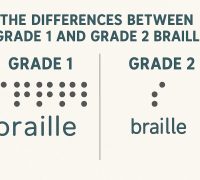
Grade 1 Braille is the simplest form of braille and is often used as an introduction for beginners. Each character in Grade 1 Braille directly corresponds to a letter, number, or punctuation mark in the alphabet. There are no contractions or abbreviations used in this grade, making it straightforward and easy to learn.

Characteristics of Grade 1 Braille:
Grade 1 Braille presents a fundamental way of learning and understanding the tactile writing system. Each braille character consists of up to six raised dots arranged in a matrix or cell. Students learning Grade 1 Braille will encounter exact representations of letters, similar to how print readers view them in the alphabet. This level of braille does not require the user to interpret contractions or abbreviated symbols, providing a clear and direct reading experience.

Benefits of Grade 1 Braille:

Simplicity: As there are no contractions, readers can easily match each symbol to the exact letter or number it represents. This simplicity allows beginners, particularly young learners, a stress-free entry into the world of braille reading.

Accessibility: It is particularly beneficial for those who are new to braille or for materials where accuracy is paramount, such as labeling or educational tools for young learners. Professionals might use Grade 1 Braille in situations where clarity is more significant than speed, ensuring that each letter is distinctly represented.

Grade 2 Braille

Grade 2 Braille is more complex and widely used in everyday reading. It incorporates contractions and short-form words, allowing for a more compact representation of text. This makes it more efficient and practical for longer texts.

Characteristics of Grade 2 Braille:
To use Grade 2 braille proficiently, one must understand a series of contractions that represent frequently used words or groups of letters. These contraction systems are constructed to optimize reading speed and material space, thereby enhancing the literacy experience for braille readers.

Advantages of Grade 2 Braille:

Efficiency: By utilizing contractions, Grade 2 Braille reduces the number of characters needed to convey the same information, saving space and making reading faster. This streamlined process is especially useful in reducing the physical size of books and materials, which would otherwise be cumbersome if written entirely in Grade 1 Braille.

Common Usage: It is commonly found in books, magazines, and other long-form texts, making it essential for those who regularly read braille. The adoption of Grade 2 Braille is widespread among organizations involved in producing braille reading materials, contributing to its prevalence and importance.

Key Differences Between Grade 1 and Grade 2 Braille

One of the primary differences is the use of contractions in Grade 2 Braille, which are absent in Grade 1. These contractions allow for a more compact and quicker way to read, as they can replace entire words or parts of words with a single braille cell. For instance, the word “and” can be shortened to a single braille cell in Grade 2.

Moreover, while Grade 1 Braille provides a one-to-one correspondence with the print alphabet, Grade 2 Braille requires a deeper understanding of its numerous contractions and rules, making it more advanced and suited for experienced readers. Learning Grade 2 Braille involves memorizing various contractions that may represent words or parts of words. The complexity of these contractions means that correct interpretation enhances reading speed, but requires more time to become familiar with each contraction’s meaning and usage.

Who Should Use Each Grade?

Grade 1 Braille: Ideal for beginners or individuals who only require braille for labeling and simple texts. It serves as a foundational stepping stone for newcomers to the braille system. For educators, this grade offers an uncomplicated method to introduce braille without overwhelming the student with complex rules or symbols.

Grade 2 Braille: Best suited for those who regularly engage with braille literature and seek a more efficient reading experience. Its use of contractions makes it a practical choice for accessing broader and more varied reading materials. Regular readers or users of braille who wish to immerse themselves in rich and lengthy text would benefit immensely from the compactness and sophistication offered by Grade 2 Braille.

Conclusion

Both Grade 1 and Grade 2 Braille serve crucial roles in the literacy of individuals who are blind or visually impaired. Understanding the differences between the two can help educators, learners, and practitioners choose the most appropriate form for their needs. Each grade fulfills its purpose – one focusing on simplicity and accessibility, the other on efficiency and common use in bulk text reading. For further insights into braille and its applications, consider exploring resources from organizations dedicated to supporting the visually impaired. These resources offer materials and training to better one’s proficiency in the braille language and adapt its usage to various daily needs and academic purposes. As the world advances toward inclusive reading platforms, understanding the utility of Grade 1 and Grade 2 Braille reinforces the importance of literacy for all.

The Role of Braille in the Legal System and Access to Justice

The Significance of Braille in Legal Accessibility

In a world striving for inclusivity, the role of Braille in achieving legal accessibility cannot be understated. It serves as a bridge to equitable justice, particularly for individuals who are blind or have low vision. The principle of justice fundamentally asserts that all individuals, irrespective of their physical capabilities, are entitled to equal opportunities in participating in legal proceedings. Hence, the integration of Braille into the legal framework is an imperative step to ensure that justice is truly blind to any form of disability.

Understanding Braille

Braille, a tactile writing system, was invented in the 19th century by Louis Braille. It comprises raised dots that are read by touch, allowing individuals who are visually impaired to read and write independently. Although modern technology has introduced several audio and visual aids, Braille has steadfastly remained a cornerstone of literacy and communication for many people with vision impairments. For these individuals, Braille is often more than just a tool—it’s a fundamental part of maintaining autonomy and participating fully in various aspects of life, including the legal system.

Braille in Legal Documents and Proceedings

In the realm of legal documentation, Braille serves a crucial function. Legal proceedings are document-heavy, often involving contracts, notices, affidavits, legal briefs, and testimonies. Ensuring these documents are available in Braille is vital for providing individuals with visual impairments the same level of understanding and participation as their sighted counterparts. This accessibility is particularly critical during legal negotiations and hearings, where grasping every minute detail can greatly influence the outcome of a case. Without access to these documents in Braille, individuals may find themselves at a disadvantage, unable to fully engage with or comprehend the proceedings that concern them.

Court Systems and Braille Services

Globally, court systems have begun to acknowledge the importance of incorporating accessibility services into their operations. Many are taking definitive steps to implement Braille services designed to assist individuals who need them. This includes the production of Braille versions of crucial court documents such as procedural guides, informational pamphlets, and other legal texts necessary for participating in the judicial process. Additionally, some judicial systems have introduced court assistance programs aimed specifically at individuals with disabilities, thus ensuring that they have the necessary support to engage fully in legal proceedings.

Challenges and Solutions

Despite these advancements, the path to fully integrating Braille into the legal system is not without its challenges. One significant obstacle is the resource-intensive nature of Braille transcription. Translating extensive legal documents into Braille requires specialized knowledge and technology, which can strain the resources of legal entities. However, partnerships with organizations specializing in Braille literacy and assistive technologies present promising solutions. Additionally, developing legislative frameworks that mandate and enforce accessibility measures within legal contexts is crucial. Such frameworks not only promote the statutory requirement for accessibility but also signal a commitment to fostering practical solutions that ensure inclusivity within the justice system.

The Future of Braille in Legal Access

The anticipated future of Braille within the legal system is one of growth, fueled by technological advancements in assistive devices. As new tools and methods are developed to enhance the translation and dissemination of Braille, the accessibility of legal information is poised to increase significantly. With ongoing advocacy and heightened awareness, the integration of Braille is more likely to entrench the principle of equal justice for all, irrespective of visual capabilities. With the active involvement of legal professionals and policymakers, who are committed to instituting inclusive practices, the justice system can evolve to become more accessible and equitable.

In conclusion, the integration of Braille into the legal framework transcends mere compliance with legal standards. It represents a meaningful commitment to building a more equitable society where justice is truly impartial. For society to abolish barriers to justice for every individual, embracing Braille as an essential element of legal accessibility is not simply beneficial but necessary. This integration reflects a broader commitment to inclusivity, ensuring every person, regardless of their visual ability, is granted the opportunity to seek and obtain justice.

The Challenges of Braille in Developing Countries

The Importance of Braille

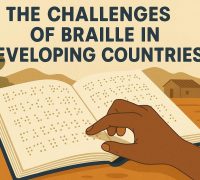
Braille holds a fundamental place in the lives of visually impaired individuals, offering not only a means to achieve literacy but also fostering a sense of independence and autonomy. As a tactile writing system, Braille empowers blind and low-vision people by enabling them to read and write through touch. Despite its critical importance, Braille’s accessibility and implementation, particularly in developing countries, are met with several challenges that need urgent attention to ensure equitable literacy opportunities for the visually impaired.

Economic Barriers

Economic constraints stand out as one of the significant barriers to widespread Braille accessibility in developing nations. One contributing factor is the lack of funding for education and resources dedicated to accessibility, which often results in the inadequate availability of essential Braille materials. The production cost of embossed Braille books is considerably higher than that of standard print books. This stark cost difference makes Braille books a scarce commodity in regions where educational budgets are extremely limited, consequently restricting the ability of visually impaired individuals to access necessary learning materials.

Educational Infrastructure

The issue extends to the educational infrastructure that supports Braille learning, which, in many developing countries, remains underdeveloped. A significant obstacle here is the shortage of trained instructors who possess the skills and knowledge necessary to effectively teach Braille. This shortage is exacerbated by a general lack of inclusive education policies that ensure visually impaired students are integrated into mainstream learning environments, allowing them to learn alongside their peers. As a result, there is an urgent need to develop robust educational programs and policies that include comprehensive Braille instruction as part of the curriculum.

Technological Constraints

While advancements in technology hold the potential to vastly improve Braille literacy, limitations arise from the lack of access to affordable technologydesigned specifically for the visually impaired. Tools such as Braille e-readers and refreshable Braille displays could significantly revolutionize access to information for blind and low-vision individuals. However, the prohibitive cost of these technologies keeps them out of reach for many in developing countries, where income levels are often below the global average. Thus, bridging the technological gap is crucial in making Braille literacy more attainable.

Cultural Perceptions

Cultural perceptions regarding disability can further hinder the adoption and acceptance of Braille. In various regions around the world, stigma attached to disabilities results in limited support for those who are visually impaired. This stigma can influence the perceived value of investing time and resources into Braille education and resources, which, in turn, restricts access and hinders effective implementation. By addressing cultural biases and shifting perceptions towards a more inclusive outlook, communities can be better equipped to support Braille literacy initiatives.

Linguistic Diversity

The linguistic diversity present in many developing countries adds another layer of complexity to Braille access. The process of translating Braille into the myriad local languages and dialects requires substantial effort and expertise. Unfortunately, not all regions have ready access to this expertise, and the scarcity of trained individuals can lead to prolonged delays in translation and distribution. Consequently, developing strategies to standardize and support Braille translations across diverse linguistic landscapes remains an essential task for promoting broader literacy access.

Future Prospects

Addressing the challenges associated with Braille accessibility in developing countries calls for a comprehensive and multifaceted approach. Such an approach should prioritize increased funding dedicated to the development of educational resources and accessibility tools for the visually impaired. Additionally, enhanced education policies must be established to ensure the integration of inclusive learning systems that account for the needs of all students, blind and sighted alike. Furthermore, cultural awareness programs that aim to shift societal attitudes towards positive disability inclusion could significantly impact the adoption of Braille by increasing its perceived value and importance.

International collaboration plays a pivotal role in overcoming these obstacles. By harnessing shared knowledge and pooling resources, nations can work together to develop sustainable and scalable solutions for enhancing Braille literacy in developing countries. This global partnership approach can lead to innovative practices and technologies that facilitate more affordable and widespread access to Braille for all visually impaired individuals.

The future of Braille literacy, particularly in developing countries, depends significantly on these collective efforts to address economic, educational, technological, cultural, and linguistic barriers. By embracing these challenges with a proactive and inclusive mindset, the potential for widespread Braille accessibility becomes attainable, paving the way for greater independence and opportunity for the visually impaired worldwide.

How to Make Home Appliances More Accessible with Braille

Introduction

The inclusion of Braille in home appliances is an essential step towards making these devices more accessible to visually impaired individuals. Incorporating tactile elements not only ensures inclusivity but also promotes independence. This article explores practical ways to integrate Braille into household appliances to enhance usability for those who rely on tactile reading.

Understanding Braille and Its Importance

Braille is a tactile writing system that uses raised dots to enable visually impaired individuals to read and write through touch. It is a crucial tool for accessing information and performing daily tasks without visual aid. For appliances, adding Braille can significantly enhance functionality and autonomy for users who read Braille.

The Significance of Braille in Daily Living

For visually impaired individuals, daily tasks can pose various challenges. Braille plays a pivotal role in bridging the gap between accessibility and functionality. Whether it involves reading a book or adjusting the settings on a household device, this tactile system offers a sense of empowerment and self-reliance.

For many, Braille is a primary mode of communication that opens doors to education, employment, and independent living. By incorporating Braille into home appliances, we broaden the scope of inclusivity, allowing individuals to engage with technology in a way that is most comfortable and intuitive to them.

Identifying Appliances Suitable for Braille Integration

When considering which home appliances can benefit the most from Braille, it is important to focus on those that are frequently used. Common examples include kitchen appliances, laundry machines, and remote controls.

Kitchen Appliances: Stoves, ovens, and microwaves can be equipped with Braille labels on buttons and dials for easy navigation. Enabling individuals to cook and prepare meals independently not only fosters inclusivity but also enhances personal autonomy and everyday living.

Laundry Machines: Adding Braille markings to dials or buttons on washing machines and dryers can help users select cycles and settings without assistance. This ensures that individuals can manage their laundry tasks with ease, supporting day-to-day responsibilities.

Remote Controls: Television and air conditioning remotes can incorporate Braille for better usability, allowing users to access entertainment and adjust settings independently. Control over personal environments is vital for comfort and convenience, and Braille offers a pathway to achieve this.

Methods for Incorporating Braille

The integration of Braille into appliances can be achieved through several methods, each offering distinct advantages and meeting various needs.

Adjustable Labels: Adhesive Braille labels can be affixed to surfaces without modifying the design of the appliance. This provides a customizable and cost-effective solution, easily replaceable as needed.

Manufacturing Integration: Appliances can be designed with built-in Braille features during the manufacturing process, ensuring they are available as a standard option for all users. This method promotes a unified approach to accessibility, embedding inclusivity at the core of design and functionality.

3D Printing: Consumers can produce custom Braille labels at home using a 3D printer, offering both flexibility and personalization for specific appliance models and user needs. This personalized approach caters to those who desire tailored solutions, enhancing the overall user experience.

Engaging with Stakeholders

To effectively implement Braille solutions in home appliances, engaging with relevant stakeholders is indispensable. These stakeholders include manufacturers, advocacy groups, and tactile reading experts, each playing a crucial role in the collaborative design process.

Manufacturers are key players in this integration, as they must understand the importance of accessibility in product design. By adopting inclusive practices, manufacturers can ensure that their products cater to a wider audience, embracing diversity within consumer markets.

Advocacy groups provide vital insights into the needs of the visually impaired community, advocating for accessibility and equitable opportunities. Collaboration with such groups ensures that the voices of those most impacted are heard and integrated into design considerations.

Consulting with tactile reading experts ensures that Braille applications are comprehensible and usable, catering to diverse literacy levels among Braille readers. Their expertise guarantees that the designs are not only functional but also intuitive, facilitating ease of use and widespread adoption.

Conclusion

Incorporating Braille into home appliances is not just a matter of convenience, but a necessary step toward equity and inclusivity. Through collaborative efforts and thoughtful design, we can enhance the accessibility of home appliances, empowering visually impaired individuals with greater independence and confidence in their daily lives.

When envisioning a future where accessibility takes precedence, integrating Braille into everyday technology stands out as a profound move toward inclusivity. It challenges the norm and encourages a culture where diverse needs are not merely acknowledged but actively met.

As technology advances, the opportunity to embed accessibility at the heart of innovation increases. With the right approach, Braille integration can become an intrinsic part of household appliances, setting a standard for inclusive design practices across industries. It’s not just about modifying existing products but thinking critically about the roles these devices play in supporting independent, dignified living for everyone.

For further information on tactile reading and accessibility standards, you may visit accessibility-focused organizations like the American Foundation for the Blind. By doing so, individuals and organizations alike can remain informed, inspired, and motivated to champion accessibility in all facets of life.

The Development of Braille Currency for the Blind

The Introduction of Braille to Paper Currency

The inclusion of Braille on paper currency represents a significant development in promoting financial independence for individuals who are blind or visually impaired. This initiative aims to address accessibility challenges by enabling these individuals to identify different denominations of banknotes without assistance, fostering a more inclusive society. By making currency tactilely identifiable, those with visual impairments can engage more independently in financial transactions, an advancement that aligns with global inclusivity goals.

Historical Context

The concept of integrating tactile features into banknotes is not new. Various countries have explored different methods over the years to make currency more accessible to individuals with vision impairments. Raised textures, different sizing of notes, and other tactile cues have been used to some extent. However, the introduction of Braille marks a progressive step in this ongoing evolution of inclusive currency design. The employment of Braille allows for a standardized method that is recognized and understood globally by individuals who read Braille, promoting consistent usability across different regions.

Countries around the world have been taking steps towards incorporating tactile features into currency. While earlier efforts were limited to size differentiation or shape variance of banknotes, these methods can sometimes be insufficient for those with severe visual impairments. This recognition paved the way for more advanced solutions like Braille which offers a standardized, recognized system of tactile reading.

Global Initiatives

Several countries have taken the lead in incorporating Braille into their paper currency. For instance, the Bank of Italy has implemented Braille features on its euro notes, setting a precedent in the European Union. The move to add Braille was not only a technical achievement but a cultural milestone that highlighted society’s shift towards inclusivity. Similarly, the Reserve Bank of India has also incorporated Braille marks into Indian banknotes to aid identification by the visually impaired. These examples illustrate a growing recognition across continents of the need for accessible currency, encouraging other nations to consider similar measures.

Other examples include Canadian currency, which features raised dots for denomination identification, albeit not in Braille, ensuring broader accessibility for all individuals with visual impairments. The Ease of access provided by these measures can instill a sense of confidence and independence, allowing individuals to manage finances with a degree of certainty previously unavailable.

Technological Advancements

The application of Braille to currency notes requires advanced printing techniques. It involves embossing precise patterns that can withstand the rigors of regular use while remaining legible to touch. Innovations in printing technology have thus played a crucial role in the successful implementation of Braille on banknotes. Specialized presses and techniques are used to create raised dots that are both clear and durable.

These technological advancements ensure that the raised Braille will not wear down easily and can be felt and read over the currency’s life cycle. Printing accuracy is vital to ensure the Braille is not only readable initially but remains so even after the note has been exchanged many times. The balance between readability, durability, and cost efficiency is a complex challenge that requires continuous improvement in printing methods.

Challenges and Solutions

Despite the advantages, integrating Braille onto currency presents certain challenges. Ensuring the durability of the embossed Braille dots so that they remain usable throughout the note’s lifecycle is a primary concern. Additionally, accommodating Braille without compromising other security features or the overall design of the currency requires careful planning and execution. For instance, the placement and size of Braille must not interfere with holograms or other anti-counterfeiting technologies.

To address these challenges, many central banks are collaborating with organizations specializing in accessibility and tactile design. This collaboration ensures that Braille features are both practical and robust, enhancing the usability of the currency for individuals with visual impairments. Experts in tactile design can provide insights into the optimal size, spacing, and placement of Braille, ensuring these elements harmonize with both security requirements and the aesthetic qualities of the currency.

Future Prospects

The continuous development of Braille in currency design reflects a broader trend toward inclusivity and accessibility in public services. As more countries become aware of the needs of their visually impaired citizens, the implementation of tactile features on banknotes is expected to become more widespread. This trend, spurred by customer feedback and international standards, highlights a strengthened commitment to accessibility.

Further advancements may include leveraging digital technology and mobile applications that complement physical currency, providing a multi-sensory approach to currency identification for those with vision impairments. These advancements could involve apps that audibly identify the denomination when a note is scanned with a smartphone’s camera. This holistic approach promises to empower individuals, giving them greater control over their financial interactions. As digital and tactile technologies converge, the potential for enhancing accessibility can be significantly expanded.

Conclusion

The development of Braille currency for the blind is a meaningful step toward creating a more inclusive society. By facilitating financial independence and reducing reliance on others, Braille features on paper currency contribute to the empowerment of visually impaired individuals, ultimately enhancing their quality of life. The addition of Braille is not merely a technological enhancement; it is a testament to societal shifts towards inclusivity and equal opportunity. This journey of transformation in currency design is just one facet of a much larger movement towards universal accessibility, setting a precedent for other public systems and services to follow. In the future, as both awareness and technology advance, there is potential for even greater innovation in making the world more accessible for everyone.

How Braille Can Improve Accessibility in Airports

Introduction to Braille and Accessibility

Braille is a crucial tactile writing system widely utilized by individuals who are blind or visually impaired. Originating in the 19th century, it was invented by Louis Braille, a French educator who developed this ingenious method involving raised dots. These dots are strategically arranged in cells consisting of up to six dots each, where individual configurations correspond to specific letters, numerals, or punctuation marks. In recent years, the burgeoning emphasis on accessibility within public spaces has been notably amplified, with airports prominently included in this progressive transformation. Incorporating Braille signage and resources within these facilities not only caters to the needs of visually impaired travelers but also elevates overall accessibility standards.

The Current State of Accessibility in Airports

The evolution of accessibility in airports has witnessed significant advances. Many airports have implemented assorted measures such as ramps for wheelchair accessibility, audible information systems for travelers with hearing impairments, and extensively trained staff to assist those requiring extra help. However, the inclusion of Braille offers a specialized advantage that can play a pivotal role in ensuring that airports cater comprehensively to the visually impaired population.

While certain airports have already made strides by embedding Braille into room signs and elevator buttons, there remains substantial scope for further enhancement. Comprehensive Braille integration is essential for crafting a fully inclusive environment where all travelers feel valued and supported.

Benefits of Implementing Braille

The incorporation of Braille within airport ecosystems yields a multitude of benefits, chief among them being the enhancement of navigation and independence for individuals with visual impairments. With clearly delineated Braille signage available for terminal maps, gate numbers, and directional indicators, visually impaired passengers can independently maneuver through the airport premises. This fosters a sense of autonomy, enabling these travelers to traverse the airport landscape with the same ease and confidence as their sighted counterparts.

Moreover, the installation of Braille systems on interactive kiosks facilitates convenient access to flight information and check-in services. This empowers visually impaired travelers, enabling them to engage with the necessary tools and systems without needing assistance from airport personnel, thereby maintaining their dignity and agency.

Another critical advantage involves creating an inclusive experience. By accommodating the needs of visually impaired travelers, airports exemplify a commitment to providing equal access and enriching the travel experience for all passengers. This proactive approach enhances the airport’s reputation, fostering a sense of goodwill and community.

Technological Innovations and Braille

The ever-evolving field of technology offers exciting innovations in integrating Braille within airport settings. The deployment of refreshable Braille displays at information desks exemplifies such technological advancements. These displays provide real-time airport and flight information in Braille, effectively functioning as digital connectivity points accessible to the visually impaired.

Furthermore, airports are beginning to explore cutting-edge solutions such as haptic technology. Leveraging the synergistic capabilities of smartphones, haptic technology guides travelers through the airport by utilizing vibrations and audio cues, thereby supplementing the Braille system. This innovative blend of tactile and auditory feedback ensures that visually impaired travelers can navigate seamlessly, even when traditional Braille touchpoints are unavailable or impractical.

Conclusion and Future Outlook

While the universal inclusion of Braille in airports may still be a nascent concept, strides are being made towards achieving comprehensive accessibility. Airports that prioritize the needs of all travelers, including those with visual impairments, espouse a commitment to inclusivity and equality. Such practices are not merely beneficial but necessary, setting a precedent for other public facilities to emulate.

As technology continues to evolve at an accelerated pace, it is anticipated that further innovations in Braille technology and other supportive systems will bolster these initiatives. The journey towards full accessibility is ongoing, but each step, however small, contributes to a more inclusive and equitable environment. In doing so, airports not only enhance the travel experience for the visually impaired but set a transformative standard for other public spaces. Embracing a future where accessibility is ingrained in the very fabric of public infrastructure promises a world where all individuals can engage with their environment confidently and independently.

The Role of Braille in Travel and Tourism

The Importance of Braille in Travel and Tourism

In the context of travel and tourism, accessibility is a crucial consideration. For individuals with visual impairments, ensuring access to information is essential for an inclusive experience. Braille plays a central role in this domain, providing vital assistance to visually impaired travelers.

Understanding Braille

Braille, a tactile writing system, is groundbreaking in its capacity to enable visually impaired individuals to read through touch. It consists of patterns of raised dots, each representing different letters and numbers. This system serves as an independent means of communication, significantly improving the autonomy of those who are visually impaired. It holds universal applicability across various settings, one of the most important being travel and tourism.

Enhancing Accessibility in Travel

The integration of Braille into travel infrastructure represents a progressive step toward greater inclusivity. Several travel-related sectors have incorporated Braille to serve this need:

Transportation: Within public transportation systems, the presence of Braille is becoming increasingly common. Critical information, such as station names and destinations, is often labeled on handrails, buttons, and directories in Braille. This adaptation enables visually impaired passengers to navigate these environments safely and independently.

Accommodations: Hotels, resorts, and other forms of accommodation are recognizing the importance of incorporating Braille into their services. Common implementations include Braille on room numbers and elevator buttons, which allows visually impaired guests to move around without assistance, ultimately offering them a heightened level of independence and comfort during their stay.

Tourism Sites: Tourist attractions, including museums and galleries, are increasingly adopting Braille for exhibit descriptions and maps. Such adaptations ensure that cultural, historical, and recreational sites are accessible to everyone, preserving the inclusive spirit of tourism.

Legal and Ethical Considerations

The mission for inclusivity is not solely about adhering to ethical standards but also involves legal considerations. Various countries have mandated through legislative frameworks the use of Braille in tourist settings, enforcing a standard that aligns legal obligations with ethical norms centered around equality. Compliance with these laws is a reflection of an organization’s dedication to fostering diversity and inclusivity within the travel industry.

Challenges and Opportunities

Despite substantial progress, certain challenges impede the widespread implementation of Braille in travel-related settings. These include high costs associated with Braille technology and production, as well as an overall lack of awareness among service providers. Acknowledging these challenges, however, presents opportunities for innovation and collaboration among key industry stakeholders.

Service providers, for instance, can initiate partnerships with organizations specializing in solutions for visual impairments to better facilitate Braille accessibility. By sponsoring and participating in training sessions and awareness programs, the travel industry can markedly enhance its ability to effectively cater to visually impaired travelers.

Additionally, emerging technologies such as digital Braille readers and portable devices offer exciting possibilities for the future of Braille accessibility, suggesting that innovation can play a fundamental role in overcoming these barriers.

A Global Commitment to Accessibility

The effort to integrate Braille into travel and tourism is echoed globally, as numerous international organizations and councils continue to expand their focus on disability inclusion. This global alignment emphasizes the importance of making travel a fundamentally accessible experience for everyone.

By prioritizing initiatives that incorporate Braille, the travel sector can contribute to the broader movement toward universally accessible environments, fostering a deeper sense of belonging and inclusivity in all facets of travel—from leisure trips to business endeavors.

The Role of Technology in Advancing Braille Accessibility

Technology continues to influence the landscape of accessibility, and the realm of Braille is no exception. Digital tools and innovations are creating new pathways for the use and implementation of Braille in travel and tourism settings. Devices such as refreshable Braille displays and apps that convert text to Braille dynamically extend the reach of accessible information.

The continuous advancement and integration of such technologies demonstrate a promising future for the role of Braille in travel, where accessibility efforts can be streamlined and customized to better suit individual needs. This progressive approach not only elevates user experiences but also enhances the market appeal of travel services committed to inclusivity.

Conclusion

The integration of Braille within the travel and tourism sector is fundamentally pivotal for ensuring equitable access for visually impaired individuals. As the industry moves forward, modernizing and embracing comprehensive accessibility measures like Braille will be integral to fostering a truly inclusive environment. The adoption of Braille in various travel components enables every traveler to experience the world more fully and with dignity.

Future aspirations for enhanced accessibility in travel anticipate increased collaboration, innovation, and commitment from all industry players. By embracing these changes, the sector paves the way toward a future where travel can be universally accessible, reflecting both the diversity of the global population and a collective commitment to inclusivity. For further insights on accessibility measures in travel, you can refer to various resources available online dedicated to this topic.

Braille and Gaming: Making Video Games More Accessible

Introduction to Braille and Gaming Accessibility

The gaming industry is constantly evolving, with developers seeking innovative ways to make video games more accessible to diverse audiences. One area of focus that has brought significant attention is the accessibility for blind and low-vision gamers. Integrating Braille into gaming could serve as a crucial development to enhance accessibility.

Understanding Braille

Braille is a tactile writing system used by people who are blind or visually impaired. It consists of raised dots arranged in cells, each with up to six dots, allowing a vast range of combinations to form letters, symbols, and even words. This system enables individuals to read through touch, opening up the world of literature and information to those who cannot rely on sight alone. Braille’s application extends beyond traditional literature and printed materials; its potential spans digital interfaces as well, including the dynamic field of video games.

The Challenge of Accessibility in Gaming

Video games are inherently visual experiences, relying heavily on graphics and detailed visual cues to convey essential elements such as actions, environments, and narratives. For blind or low-vision players, this reliance on visual information presents a significant barrier to enjoyment and participation. Despite noteworthy technological advancements, there remains a substantial gap in accessibility for these players. The challenge arises not only from the visual nature of games but also from the lack of proactive consideration for accessibility during the design process. While some games incorporate audio cues or narrative-driven audio descriptions to assist visually impaired players, integrating Braille offers another layer of inclusion that could enhance the experience significantly.

Incorporating Braille Technology in Gaming

The integration of Braille in gaming can occur through several technological innovations. A prime method involves the use of Braille displays designed to convey in-game information through tactile feedback. These displays can transform digital text into Braille, providing narratives, instructions, or other essential game data in a format accessible to blind players. By continuously updating the Braille content in real time, players can receive current and contextual information, immersing them further into the game world.

Additionally, developments in haptic feedback systems offer exciting potential. Such systems can simulate Braille-like touch sensations directly on a controller or peripheral device. By offering tactile responses corresponding to on-screen actions or changes, these systems can serve as an intermediate between traditional gaming controls and Braille interfaces, enhancing the accessibility ecosystem.

Collaboration Between Developers and Accessibility Advocates

To effectively implement Braille in gaming, collaboration between game developers, accessibility advocates, and the visually impaired community is essential. This partnership is crucial in ensuring that the needs and preferences of blind or low-vision gamers are considered comprehensively in the design and development process. Such collaborations allow developers to gain valuable insights into potential obstacles and user-centric solutions through real-world feedback and testing.

Moreover, this cooperative approach aids in identifying potential challenges and solutions early in development. It promotes a proactive stance in addressing accessibility issues, leading to more seamless integration that enhances the gaming experience for the visually impaired from the ground up. Working together, stakeholders can prioritize accessibility features that balance innovation with practicality, setting the stage for truly inclusive gaming environments.

Case Studies and Successful Implementations

A few pioneering developers have begun to experiment with Braille-integrated gaming, showing that successful implementation is not only possible but also greatly beneficial. Early case studies demonstrate promising results, highlighting both success stories and areas for improvement. For instance, games that have incorporated Braille successfully often combine it with other accessibility features, such as audio descriptions or customizable interfaces, creating a comprehensive and immersive gaming experience. These games often receive positive feedback for their inclusivity and for acknowledging a diverse player base.

Such implementations offer valuable lessons for the industry, showcasing effective methods to weave accessibility into the fabric of game design. They highlight the importance of continual testing and feedback, ensuring that technological solutions are user-friendly and effective for the intended players. In the process, these pioneering efforts provide a template for others to follow, fostering an environment of shared knowledge and progress.

Conclusion

Making video games accessible to all players, including those with visual impairments, is a growing priority within the gaming industry. By leveraging Braille technology alongside other accessibility features like audio enhancements and haptic feedback, developers can craft more inclusive gaming experiences. The path forward involves a combination of continuous innovation, collaboration with accessibility experts, and a steadfast commitment to inclusive design. Ensuring that gaming remains an enjoyable activity for everyone, regardless of their visual capabilities, demands this multi-faceted approach.

Ultimately, the integration of Braille into gaming is an exciting frontier that can significantly enhance the gaming landscape. It not only opens up a world of opportunities for players with visual impairments but also enriches the industry by embracing diversity and inclusivity. As technology progresses and awareness grows, the hope is that such initiatives will become the standard rather than the exception, making gaming truly accessible to all.

How to Make Your Business More Braille-Friendly

Understanding the Importance of Braille Accessibility

Ensuring that your business is Braille-friendly is a vital step in accommodating visually impaired customers. Braille is a tactile reading and writing system used by people who are blind or who have low vision. By integrating Braille into your business environment, you enhance accessibility and demonstrate a commitment to inclusivity.

Legal Requirements and Best Practices

In many countries, there are legal mandates that require businesses to accommodate customers with disabilities, including the use of Braille. For instance, the Americans with Disabilities Act (ADA) mandates that reasonable accommodations must be provided. Similarly, other regions have specific guidelines. Therefore, it’s essential to familiarize yourself with local regulations to ensure compliance.

Signage and Labels

One of the fundamental steps in making your business Braille-friendly is the inclusion of Braille in signage. This can include restroom signs, exit signs, and room numbers. Ensure that signs are mounted at accessible heights and use both visual and Braille text. Not only does this make navigation easier for those who utilize Braille, but it also integrates the sense of touch into the way information is presented throughout your establishment, thus bridging communication between those who are sighted and those who are visually impaired.

Product Information

For businesses selling physical products, providing product information in Braille can significantly enhance the shopping experience for visually impaired customers. Consider including Braille labels that provide product details and pricing. This practice supports autonomous shopping and respects the independence of visually impaired consumers. Adding such labels can assist in building trust and loyalty with customers who value businesses that prioritize inclusivity.

Menus and Brochures

Restaurants and service providers should offer menus and brochures in Braille. This not only encourages independence but also ensures that visually impaired patrons can browse offerings and make informed decisions about their purchases without needing assistance. Furthermore, offering Braille materials aligns the dining and service experience with universal accessibility standards, thereby broadening your client base.

Implementing Technology Solutions

Technology plays a crucial role in enhancing accessibility. Options for integrating technology to support Braille accessibility are varied and continually evolving. As technology advances, new devices and applications are being developed to facilitate communication and access to information for the visually impaired.

Interactive Displays

Consider implementing interactive displays that speak information aloud while also offering a Braille interface. This dual approach can cater to the needs of visually impaired customers more effectively. Interactive displays can also engage other senses, making the experience more engaging and intuitive for all users. In doing so, this technology creates an inclusive atmosphere where information is available in multiple formats.

Assistive Devices

Offering assistive devices can be beneficial. Devices such as Braille readers that convert digital text into Braille or audio are valuable additions to any accessible business environment. Partnering with accessible technology experts can aid in selecting and deploying the right solutions for your business. It is important to stay updated on the latest advancements to continuously improve and adapt to the changing needs of your clientele.

Employee Training

Education and training of staff are crucial in fostering a Braille-friendly environment. Employees should be trained in disability etiquette and made aware of the significance of Braille accessibility. This ensures that all team members are prepared to assist and communicate effectively with visually impaired customers.

Understanding Customer Needs

Training should emphasize understanding and anticipating the specific needs of visually impaired customers. Encouraging staff to ask and not assume what assistance a customer may require is key. Staff should be trained to be attentive and responsive to the needs and preferences of visually impaired customers, creating a welcoming and supportive environment.

Regular Feedback

Regularly seeking feedback from visually impaired clients can provide insights into the effectiveness of your Braille accessibility measures and help identify areas for improvement. Feedback loops allow businesses to not only address concerns but also to implement new ideas that could enhance the accessibility of their services and products.

Benefits of Braille Accessibility

Implementing Braille accessibility initiatives can lead to various benefits for your business. While compliance with regulations is a fundamental reason, fostering sincerity in inclusivity promotes goodwill and corporate social responsibility. Incorporating Braille can also diversify your customer base and enhance your brand’s image.

Brand Reputation

By demonstrating a commitment to inclusivity, businesses often see an improvement in their brand reputation. Customers tend to favor brands that prioritize a broad range of accessibility accommodations, as it reflects compassion and responsibility.

Customer Loyalty

Businesses that invest in creating an inclusive and accessible environment often experience increased customer loyalty. By enhancing the customer experience for visually impaired patrons, businesses can form lasting relationships and encourage repeat business. Braille initiatives often signal to customers that a business is willing to go beyond mere compliance and genuinely cares about the customer experience.

Conclusion

Creating a Braille-friendly business environment involves several thoughtful steps and considerations. By incorporating signage, utilizing technology, and ensuring comprehensive staff training, your business can provide an inclusive experience for all customers. Not only does this comply with legal requirements, but it also enhances your brand reputation as an inclusive and accessible business. In an ever-evolving landscape, adopting these practices and remaining mindful of the changing needs of diverse customers will position businesses at the forefront of accessibility and inclusivity efforts.

The Future of Braille in the Age of Voice Assistants

The Evolving Role of Braille

Braille has long been a fundamental tool for the visually impaired, offering a tactile means to read and write effectively. Developed in the early 19th century by Louis Braille, this system uses raised dots to represent letters and numbers, enabling individuals to engage with texts and gain independence. However, the advent of voice assistants is reshaping the landscape of accessibility tools.

Voice Assistants as Catalysts for Change

Voice technology has seen significant advancements with the introduction of intelligent assistants such as Amazon’s Alexa, Apple’s Siri, and Google Assistant. These platforms leverage voice recognition to perform tasks, answer queries, and manage a range of devices. For the visually impaired, this technology offers an alternative to traditional interaction methods, facilitating easier access to information and streamlined control over smart home environments.

Recent studies highlight the growing adoption of voice assistants among individuals with visual impairments. These devices enable users to access real-time information, read books aloud, and enhance independence in daily tasks. The convenience and accessibility provided by voice technology have raised discussions about the future necessity of learning Braille.

Complementary Tools or Replacements?

Despite the popularity of voice assistants, Braille remains an indispensable tool for many in the visually impaired community. This distinction is crucial in various contexts, such as education and employment, where literacy in Braille continues to play a significant role. Educational materials, scientific notations, and mathematical equations often require a tactile medium for comprehensive understanding—a niche that voice cannot fill effectively.

Braille literacy is associated with higher academic achievement and employment rates among the visually impaired. According to research from institutions like the National Federation of the Blind, individuals proficient in Braille tend to secure better job opportunities and achieve greater independence.

Technological Integration and Future Directions

The future likely holds a more integrative approach, combining the strengths of both Braille and voice technologies. Advances in refreshable Braille displays, which convert digital text into Braille, represent a significant development in this area. These devices, when integrated with voice assistant capabilities, could optimize accessibility for visually impaired users.

Organizations and developers continue to innovate, creating applications and devices that utilize both Braille and voice interactions. This collaborative direction supports a comprehensive accessibility strategy, acknowledging that neither tool is wholly sufficient on its own.

Conclusion

While voice assistants significantly enhance daily convenience, Braille remains an essential component of literacy and education for the visually impaired. As technology evolves, a hybrid approach that leverages the strengths of both Braille and voice systems appears promising. Stakeholders, including educators, technologists, and advocacy groups, must collaborate to ensure that advancements in accessibility technologies meet the diverse needs of the community.

For additional resources and information on Braille and voice technology integration, consider visiting specialized organizations such as the American Foundation for the Blind and the National Federation of the Blind.