
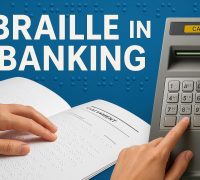
Braille in Banking: Accessible Statements and ATMs

Braille in Banking: A Step Towards Inclusivity

The evolution of banking has taken significant strides toward inclusivity by integrating Braille into its services. This move aims to better serve individuals who are blind or visually impaired, providing them with the tools necessary for effective financial management. As innovations in technology increase and awareness of accessibility grows, banks worldwide are adapting their services to become more inclusive and usable for everyone.

Braille Statements: Enhancing Financial Management

Financial statements form the backbone of personal finance management. For visually impaired individuals, accessing these statements in Braille eliminates the dependency on others to interpret and understand their financial condition.

Braille Statements: A New Norm

Modern-day banking institutions have recognized the importance of Braille statements. Not only do these statements provide all essential details such as account balances, recent transactions, and other financial information, but they also empower visually impaired customers to manage their finances independently and with confidence.

Role of Technology in Braille Integration

Converting standard text to Braille is not merely a manual task. It involves cutting-edge technological solutions such as specialized software and hardware like Braille embossers, which ensure that Braille documents are produced efficiently and with high accuracy. These technological tools have streamlined the production of Braille statements, making them more easily accessible to those in need.

Banks are also upgrading their digital platforms to be compatible with screen reading software, allowing visually impaired users to access similar information in a digital and accessible format. This dual offering of both physical and digital statements ensures that the customers have the choice to select a format that best meets their needs.

Steps to Request Braille Statements

Should a customer wish to receive Braille statements, the process is straightforward. Most financial institutions offer dedicated customer service channels specifically trained to meet the needs of visually impaired clients. Through these channels, customers can gain insights into accessing their statements in Braille or inquire about other accessible formats. Banks prioritize clear communication and ease of access when facilitating these requests.

Enhancing ATM Accessibility with Braille Features

Beyond statements, the banking sector’s commitment to accessibility extends to ATM usage, which is a vital aspect of day-to-day banking for many individuals. By enhancing ATMs with accessible features, banks ensure a broader inclusion of visually impaired customers.

Braille Keypads: Tactile Assistance

Modern ATMs equipped with Braille keypads allow visually impaired users to navigate the machine using touch. These keypads are designed with raised numbers and symbols, ensuring that users can confidently perform transactions without visual assistance.

Audio Feedback: A Complementary Feature

In addition to tactile interfaces, audio assistance features further enhance ATM accessibility. By plugging in personal headphones, users can receive spoken instructions, guiding them through processes such as PIN entry and option selections. This audio feedback not only provides step-by-step assistance but also helps confirm actions, reducing errors, and increasing user security during transactions.

Maintaining User Privacy

While accessibility is a primary concern, privacy also holds paramount importance in banking transactions. Accessible ATMs are designed to respect user privacy by employing technologies that ensure that any audio instructions remain personal through the use of personal earphones. This design allows users to confidently conduct transactions without the fear of their personal information being disclosed to others around them.

Striving for Continual Improvement

The journey toward full accessibility in banking is a continuous process. Ongoing enhancements are driven by customer feedback, indicating areas for improvement, as well as by legislative frameworks that mandate inclusive practices. Governments worldwide have introduced regulations that ensure banks offer accessible services to everyone. Compliance with these regulations is crucial for banks not only to provide equitable services but also to foster a more inclusive society.

Furthermore, banks are encouraged to develop an open dialogue with their customers to gather feedback that could lead to future innovations in accessible banking solutions. This continual listening and adaptation ensure that the needs of all individuals, including those with visual impairments, are adequately met.

For those seeking additional resources about accessible banking services, it is recommended to explore their respective bank’s official website. Here, customers can find detailed information about the various accommodations available and gain direct advice by reaching out to well-trained customer service representatives ready to guide and support them in optimizing their banking experience.

In conclusion, the integration of Braille into banking services is not just about meeting compliance requirements; it’s about recognizing and addressing the needs of visually impaired individuals with dignity and respect. As the banking industry continues to embrace technological advancements and inclusivity, the goal remains clear: to offer services that cater to all customers, thereby promoting independence, confidence, and empowerment among visually impaired individuals in their financial journeys.

How Blind People Use Braille in Everyday Life

Understanding Braille

Braille is a tactile writing system developed for individuals who are blind or have significant visual impairments. Its origins date back to the 19th century, when Louis Braille, who became blind after a childhood accident, invented this system to facilitate reading and writing through touch. Braille has since evolved into a cornerstone of literacy for the blind community across the globe. The simplicity and efficiency of the Braille system allow its users to interpret information by feeling patterns of raised dots.

The Basics of Braille

Braille consists of a simple yet effective configuration of six dots arranged in a 3×2 matrix. This setup can be used to form 64 unique patterns, each representing a different letter, numeral, punctuation mark, or even complete words and phrases. Unlike traditional reading, which relies on visual recognition, Braille is based on tactile feedback. By gently running their fingers over the dots, users can decode the information contained in these tactile symbols.

Learning Braille

Acquiring proficiency in Braille often begins during childhood as part of a formal educational process aimed at providing tools for independence and personal development. Educational institutions and organizations dedicated to the blind or visually impaired often offer specialized programs and resources to support Braille literacy. The availability of these resources supports the educational and social integration of blind children, empowering them to interact with written content effectively. Moreover, adult learners also have access to Braille literacy programs, ensuring that they too can gain the skills needed to read and write independently. Resources such as Braille primers, reading materials, and digital tools are employed to make learning engaging and comprehensive.

Everyday Uses of Braille

For individuals with blindness, Braille serves as a critical tool not only for communication but also for managing everyday activities independently and confidently. By equipping blind individuals with a means to understand and create written language, Braille opens doors to education, leisure, and practical daily tasks.

Reading and Writing

One of the primary functions of Braille is to facilitate reading and writing practices. Many books, including mainstream literature, educational textbooks, and reference materials, are translated into Braille. Because of this adaptation, blind individuals are no longer limited in accessing a diverse range of written works. They can enjoy novels, academic content, and more without requiring assistance. Braille writing tools such as the Perkins Brailler—a mechanical typewriter-like device—and Braille notetakers, which are electronic devices that allow users to input and store text, are fundamental to facilitating these activities. These tools enable users to maintain personal notes, draft documents, or write creatively.

Labeling and Organization

The practicality of Braille extends to the labeling and organization of everyday items. Braille labels are commonly used to mark personal items, kitchen supplies, medication, and other household products. These labels allow blind individuals to independently identify items such as spices, cleaning agents, and toiletries without needing sighted assistance. Furthermore, many companies recognize the necessity of inclusive labeling, leading to the increased presence of Braille on consumer product packaging.

Accessing Technology

The digital revolution has significantly expanded the functionalities available to Braille users. One of the advanced tools in this regard is the refreshable Braille display, a device that translates digital text into Braille by mechanically raising and lowering pins to form Braille characters in real time. These displays connect to computers, tablets, and smartphones, offering blind individuals real-time access to digital content such as emails, websites, and documents. This technological advancement broadens the scope of activities that can be undertaken using Braille, enhancing educational and professional opportunities for blind individuals.

Braille in Public Spaces

In public spaces, the incorporation of Braille into signage and navigation aids underscores a commitment to accessibility. Whether in elevators, where buttons are labeled with Braille, or in transportation hubs that use Braille for route guides, these features ensure that the visually impaired can navigate public areas without assistance. Restroom signs and emergency instructions also frequently include Braille, contributing to a more inclusive public environment.

The Future of Braille

The ongoing evolution of technology continues to expand the potential applications for Braille. Developments in electronic Braille devices promise more compact, affordable, and efficient solutions for Braille users. These innovations might incorporate features like advanced text-to-Braille conversion capabilities or enhanced connectivity with other digital devices. As these technologies develop, they will further integrate Braille into modern life, rendering it even more relevant and accessible.

Educational tools are also evolving, with more interactive and engaging methods being designed to promote Braille literacy among all age groups. These advancements will likely include mobile applications, online platforms, and gamified learning experiences that cater to diverse learning preferences.

Braille remains an indispensable tool in promoting literacy and independence among the blind community worldwide. It empowers individuals to engage fully with written material, fostering more inclusive educational and societal opportunities. Organizations that champion Braille literacy and accessibility, such as the National Federation of the Blind and the American Foundation for the Blind, provide valuable resources for supporting these advancements. Leveraging these tools ensures that Braille continues to play a pivotal role in the lives of millions globally, enabling those with visual impairments to achieve independence and access experiences and information that might otherwise remain out of reach.

The Challenges of Making Braille Accessible Worldwide

Introduction

The development of Braille, a tactile writing system specially designed for individuals with visual impairments, marks a significant step forward in the pursuit of accessibility and inclusivity. Yet, achieving global accessibility of Braille continues to pose various challenges. This article delves into these challenges and the dedicated efforts to address them, ensuring that Braille serves as a reliable resource for individuals who rely on it in their daily lives.

High Cost of Braille Materials

The production of Braille books and materials entails expenses significantly higher than those associated with standard print materials. This disparity arises due to the need for specialized equipment and materials, particularly the heavy, durable paper required for Braille embossing. These factors collectively escalate the production costs, posing a substantial financial hurdle for many. This is especially pronounced in low-income regions where financial resources are scarce. To alleviate these challenges, several initiatives are focused on reducing costs. Among these, advancements in technology, such as the development of Braille e-readers and digital displays, stand out. These innovations offer a more cost-effective and scalable solution, making Braille more accessible economically and practically.

Technological Advancements

While technological developments have revolutionized numerous industries, integrating modern technology with Braille accessibility presents a unique set of challenges. Developing affordable and user-friendly Braille devices, including Braille notetakers and refreshable Braille displays, necessitates considerable research and investment. This is because these devices need to be both functional and user-friendly to provide maximum benefit. Organizations worldwide are investing in innovative solutions, such as touch-based devices. These devices have the potential to translate digital text into Braille in real-time, significantly enhancing the accessibility of digital information for Braille users. The pursuit of such technological advancements is crucial, as it holds the promise of making Braille more adaptive to the fast pace of technological change that characterizes the modern world.

Regional Disparities

The availability of Braille across the globe is marked by stark disparities, with numerous regions lacking the necessary resources and infrastructure to support Braille literacy fully. In many developing countries, limited government intervention and support mean that non-profits and international organizations often spearhead efforts to fill this gap. Such organizations play a crucial role in promoting Braille literacy and facilitating training programs. These initiatives are vital in ensuring that visually impaired individuals in underserved regions can access educational and professional opportunities, thereby enhancing their ability to participate actively in both local and broader societal contexts.

Linguistic Diversity

The challenge of implementing Braille universally is further complicated by the linguistic diversity prevalent across the globe. Each language requires the development of a unique Braille code, a process involving complex linguistic and technical considerations. Organizations dedicated to this cause, such as the Braille Authority, are instrumental in standardizing Braille codes for different languages, promoting consistency and accessibility. The standardization efforts play a pivotal role in ensuring that Braille can be effectively utilized across different languages and regions, contributing to a more inclusive global society.

Education and Training

Education remains a cornerstone for the widespread adoption and accessibility of Braille. Educating both the visually impaired community and the sighted populace about Braille is critical to fostering understanding and acceptance. The current landscape is marred by inadequately trained educators and a paucity of Braille resources within educational systems, which hinders the effective dissemination and adoption of Braille. To counteract these challenges, various initiatives focus on providing specialized training for teachers who can then proficiently instruct students in Braille. Moreover, incorporating Braille education into the broader educational curriculum is a crucial step towards ensuring that future generations, both sighted and visually impaired, are conversant with this vital tool.

Conclusion

Despite the myriad challenges associated with making Braille accessible on a global scale, the concerted ongoing efforts provide a promising outlook. By addressing the high costs associated with Braille materials, leveraging advancements in technology, bridging regional disparities, accommodating linguistic diversity, and enhancing educational initiatives, significant progress can be achieved. It requires persistent collaboration across various sectors, including governments, non-profits, and the private sector, to ensure that individuals reliant on Braille are granted equal opportunities to participate fully in societal activities. Through these continued efforts, it is anticipated that the barriers currently impeding the accessibility of Braille can be significantly reduced, paving the way for a more inclusive society where the visually impaired can thrive unhindered by barriers of accessibility.

The Cost of Producing Braille Books and Materials

Understanding the Cost of Producing Braille Books and Materials

The process involved in creating Braille books and materials is comprehensive and intricate, significantly different from conventional publishing due to its unique nature. This article explores the factors contributing to the considerable costs associated with Braille production.

Specialized Production Process

Producing Braille books demands a specialized approach stemming from its tactile reading nature. Braille involves a system of raised dots that represent letters and numbers. The transition from print to tactile format necessitates the use of high-end equipment to emboss these dots onto paper. This aspect alone introduces higher labor and material costs when compared with traditional printing methods. The embossing machines are not only costly but also demand skilled operators capable of producing quality outputs consistently.

Material Costs

The materials used in producing Braille texts are among the most significant contributors to the cost. Braille requires durable, high-quality paper that must endure both the embossing process and frequent handling. The weight and thickness of this specialized paper are crucial to ensure the tactile dots do not flatten or wear out over time. As a result, Braille paper is substantially more expensive than the standard paper used for typical books. This cost discrepancy alone accounts for a significant portion of the overall expense of Braille book production.

Technological Influence

Technological advancements have had a notable impact on the production of Braille. The introduction of devices such as refreshable Braille displays and Braille embossers has facilitated more efficient conversion of texts into Braille. Nevertheless, acquiring this technology demands a sizeable initial investment. As these digital solutions become widespread, there is potential for these costs to stabilize, creating a more economically viable production process in the future. For those interested in understanding how technology further influences Braille production, the American Printing House for the Blind is a valuable resource.

Customization and Scale

Braille publications often demand customized translation and adaptation, which differ from language to language and across content structures. This necessity, combined with typically smaller production scales, results in higher costs per unit than seen in traditional publishing. Unlike conventional publishing that thrives on economies of scale, Braille production involves limited print runs that do not benefit from these cost-reducing principles.

Distribution Challenges

After production, distributing Braille materials introduces additional financial considerations. The physical characteristics of Braille books—noticeably bulkier and heavier than standard books—result in increased shipping expenses. Moreover, ensuring that these materials reach their intended audience demands collaboration with specialized distribution networks, each adding an additional layer of complexity and cost.

The Role of Subsidies and Donations

Given the substantial costs involved in producing Braille materials, many organizations depend on government subsidies, grants, and donations to provide these resources at minimal or no cost to users. Governments and non-profit organizations play a critical role in funding initiatives intended to make such materials accessible to visually impaired individuals. Assistance from bodies like the National Federation of the Blind highlights the importance of external support in overcoming financial barriers to inclusivity.

Conclusion

In conclusion, the cost factors in producing Braille books and materials encompass a wide range, from specialized production and material quality to technology usage, customization needs, and distribution logistics. While technology offers a mitigation potential, the sector still relies heavily on substantial financial support. Ensuring that visually impaired individuals have access to essential resources remains a priority that necessitates addressing these diverse production costs. Promoting inclusivity and supporting the visually impaired community is contingent upon our collective ability to sustain and improve the processes involved in Braille material production.