The Importance of Braille Literacy in Higher Education

The Role of Braille Literacy in Higher Education

The integration of Braille literacy into higher education is crucial for students who are blind or visually impaired. Despite advances in technology that offer a variety of assistive solutions, Braille remains a critical tool for tactile learners and provides a foundation that other technologies build upon.

Understanding Braille Literacy

Braille is a tactile writing system used by individuals who are visually impaired. It consists of patterns of raised dots that are felt with the fingertips. This system enables users to read not only plain text but also complex mathematical notations, musical scores, and scientific symbols. The importance of Braille in providing access to these educational materials cannot be overstated, making it an essential component of higher education.

For individuals who rely on Braille, the tactile nature of the system offers a hands-on interaction with text that reinforces learning and comprehension. It serves not only as a medium for reading and writing but also as a fundamental tool for understanding abstract concepts presented in various academic subjects. Mastery of Braille literacy allows students to engage deeply with learning materials that require careful analysis and interpretation, such as mathematical derivations and scientific experiments, which are often challenging to interpret through audio alone.

Benefits of Braille in Higher Education

One of the primary benefits of Braille literacy is the fostering of independence. Higher education demands a high level of academic rigor and independence, and Braille enables students to access textbooks, take notes, and navigate coursework independently. These autonomous learning capabilities significantly contribute to a student’s academic success.

Additionally, Braille literacy instills self-confidence in students, empowering them with the knowledge that they can engage with educational content on equal footing with their sighted peers. The ability to physically interact with reading materials through touch often enhances memory retention and understanding, providing a competitive edge in academic performance.

Braille also supports the development of literacy skills equivalent to those offered by print literacy among sighted students. This includes grammar, phonetics, and even spelling through tactile feedback, which remains a vital aspect of even advanced academic literature and research. The experience of learning grammar and spelling through tactile interaction helps solidify these skills in a way that can be directly applied to writing and understanding complex academic texts.

Combining Braille with Technology

While technologies such as screen readers and audio books have widened the scope of accessible material, they do not replace the need for Braille. Rather, they complement it, allowing for a multifaceted approach to learning. Modern devices, such as refreshable Braille displays, combine digital technology with traditional Braille, providing students with immediate access to digital content.

Integrating these tools within college programs enhances the educational experience. Refreshable Braille displays, for example, enable students to instantly access digital files, transforming text on a screen into tangible, readable Braille. By synchronizing with devices like computers and tablets, this technology bridges the gap between digital and tactile learning environments, offering real-time interaction with texts and promoting efficient study habits.

Several universities now incorporate Braille technology in their disability services, supporting students’ diverse learning preferences and needs. Disability offices work to ensure that appropriate assistive devices are available and that faculty are trained to accommodate and facilitate Braille literacy effectively. By adopting an inclusive approach, institutions demonstrate a commitment to empowering all students, regardless of their visual capabilities, to achieve academic success.

Challenges and Considerations

Implementing a robust Braille literacy program in higher education is not without challenges. These include ensuring access to up-to-date Braille materials, training for faculty, and the initial financial investment in Braille technology. However, the long-term benefits, such as improved academic outcomes and self-efficacy, far exceed the initial hurdles.

The availability of Braille materials remains a significant concern, as the production and distribution of educational resources in Braille can be time-consuming and costly. Institutions must partner with publishers and specialized services to ensure that students have timely access to textbooks and other essential reading materials.

Moreover, faculty training is crucial to effectively supporting Braille literacy in the classroom. Educators need to be aware of how to incorporate Braille resources and technology into their teaching methods, and they must be equipped to address the unique challenges faced by visually impaired students. Ensuring that faculty have ongoing training and resources available is an essential step in maintaining an inclusive academic environment.

Institutions are encouraged to evaluate their resources and commit to developing comprehensive support systems that incorporate Braille. This requires collaboration with organizations that specialize in services for the visually impaired to establish a strong infrastructure. Additionally, schools may seek grant opportunities and partnerships to alleviate the financial burden associated with implementing Braille programs.

The Future of Braille in Academia

As more higher education institutions recognize the value of Braille literacy, there is an ongoing push to enhance accessibility and inclusion. The commitment to Braille literacy is not merely a matter of compliance but an investment in the academic and future career success of students who are blind or visually impaired.

Ensuring access to Braille resources is a step toward creating a more inclusive educational environment where all students, regardless of their visual ability, can thrive. As educational institutions continue to expand their support for Braille literacy, they are setting new standards for accessibility and fostering a culture of diversity and inclusion that benefits the entire academic community.

The role of Braille literacy in higher education, therefore, serves as a cornerstone for personal and academic growth among visually impaired students. By embracing this vital tool, universities and colleges are not only breaking down barriers to education but are also paving the way for future generations of learners to achieve their full potential within an equitable and supportive learning environment.
How Braille Can Be Used in Coding and Programming

The Intersection of Braille and Coding

In a world where technology is ever-evolving, coding has become a fundamental skill, integral to many aspects of daily life and work. For those aiming to foster inclusivity and accessibility within this digital realm, Braille emerges as a critical bridge, especially for individuals who are visually impaired. The fusion of Braille with coding not only opens avenues for these individuals to participate in technological innovation but also highlights the broader need for accessible programming environments.

Braille Displays and Software

Braille displays are sophisticated devices designed to translate digital text into tactile input, enabling a visually impaired person to comprehend and interact with digital content. Typically, these displays connect to computers or other electronic devices through USB or Bluetooth. The core functionality involves an array of diminutive pins that dynamically elevate and retract to form Braille characters, providing real-time translation of text into a tactile format.

With this technology, visually impaired programmers can manage to read and write code effectively. As Integrated Development Environments (IDEs) have evolved, many have incorporated features to support Braille. This support often comes through plugins or extensions. These tools convert screen-based code into a format that Braille displays can render. Upon implementing these adaptations, a more inclusive environment for coding is established.

Supporting Programming Languages

The spectrum of programming languages that can be effectively navigated through Braille is broad. Languages such as Python, JavaScript, and Java are among those that can be adapted for Braille use. These languages are widely acclaimed and frequently utilized in various industries, thus ensuring that visually impaired programmers can be part of mainstream programming practices.

Platforms emphasized on accessibility, provide specialized tools that seamlessly integrate Braille support into programming initiatives. These tools are crucial in expanding access, enabling visually impaired coders to write, debug, and compile code with competence similar to their sighted counterparts.

Challenges and Considerations

While Braille displays significantly enhance accessibility, certain intricacies in programming prove challenging. Programming languages often involve complex structures; intricate loops, conditional logic, and nested code are but a few examples. Navigating these complexities through a tactile interface can be demanding. The tactile nature of Braille means that the information conveyed per unit of space is less than visual text, requiring visually impaired coders to break down information into smaller, manageable parts.

Comprehensive training becomes vital to equip visually impaired individuals with the skills necessary to deftly operate within these frameworks. Skill development programs are necessary to assist in overcoming these hurdles. Providing step-by-step guidance in understanding and managing code structures can significantly decrease the learning curve for these individuals.

Educational Resources

Numerous educational resources have emerged, dedicated to supporting visually impaired individuals in acquiring coding skills. These initiatives are spearheaded by organizations committed to closing the accessibility divide within the tech industry. Training programs tailored for visually impaired learners teach programming within the framework of Braille, ensuring that all students receive support adapted to their needs.

These resources are pivotal in equipping learners with foundational skills for potential careers in software development. Besides formal training programs, an array of diverse resources is available, including online courses and communities that offer support and camaraderie. Together, these resources cultivate an environment in which visually impaired individuals can thrive, actively contributing to technological advancement.

Overall, the confluence of Braille and coding is not merely about access; it’s about inclusion. When the tech industry makes strides towards greater inclusivity, it allows for a wider array of individuals to bring their insights and innovations to the table. This not only enhances the industry but enriches the digital landscape as a whole.

As technologies supporting visually impaired coders continue to evolve and improve, the opportunities for these individuals expand correspondingly. It is through thoughtful development and the adoption of inclusive technologies that we can ensure everyone, regardless of visual capacity, can contribute to and shape the future of technology. Thus, embracing the intersection of Braille and coding is a testament to the commitment towards a more equitable and innovative digital world.

The Connection Between Braille and Sign Language

The Basics of Braille and Sign Language

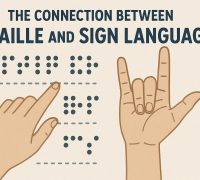
Braille and sign language are two distinct forms of communication designed to meet the needs of individuals with sensory impairments. Braille is primarily used by people who are blind or visually impaired. It comprises patterns of raised dots that represent letters and numbers, enabling users to read through touch. On the other hand, sign language is used by individuals who are deaf or hard of hearing. It involves the use of hand shapes, movements, and facial expressions to convey meaning.

The Development and History of Braille

Braille was developed by Louis Braille in the early 19th century. It evolved from a tactile military code called “night writing,” which allowed soldiers to communicate silently at night without light. Over time, Louis Braille refined this system to create a more accessible format for the visually impaired. The resulting six-dot cell patterns allowed for an efficient and easy-to-learn system. This innovation marked a transformative point in providing literacy for the blind community, paving the way for increased independence and educational opportunity.

The Evolution of Sign Language

Sign language has a rich history, with variations existing all over the world. Each country or region often has its unique sign language—such as American Sign Language (ASL) or British Sign Language (BSL)—although they share some common traits. The formal recognition and standardization of these languages have progressed significantly throughout the 20th and 21st centuries, becoming a crucial aspect of deaf culture and education. The development of sign language has brought about a profound change in societal perception, recognizing it as a full-fledged language with its grammar and syntax.

Differences and Similarities

Although Braille and sign language serve different communities and purposes, they share a common goal: enabling effective communication. Let’s delve into their key differences and similarities.

Varying Use of Senses: Braille is tactile, engaging the sense of touch, while sign language is visual, relying on sight. This fundamental difference dictates the domains in which each language is applied—a means to accommodate diverse sensory abilities.

Cultural Significance: Both Braille and sign language are more than just modes of communication; they are integral to the cultural identities of their users. They provide a sense of belonging and community for people with visual or auditory disabilities, reinforcing shared experiences and common understanding in their respective communities.

The Role of Technology

With advancements in technology, both Braille and sign language have seen improvements in accessibility and usability. Devices like Braille readers and refreshable Braille displays have expanded access to written material for the visually impaired. Similarly, video technology and mobile apps have enhanced the learning and use of sign language, removing barriers and opening new avenues for interaction and education.

Technological Innovations

Recent technological innovations have further propelled the development and integration of these languages. For instance, electronic Braille systems now allow visually impaired users to read digital text in a manner that is both convenient and efficient. These systems have incorporated refreshable displays that can transform electronic documents into Braille, making a vast amount of information readily accessible. On the other hand, applications that facilitate sign language learning and translation continue to advance, providing tools that bridge communication gaps and promote understanding.

Cross-Disciplinary Learning

Educational programs are now increasingly embracing both Braille and sign language. Institutions are offering combined curricula that encourage the learning of both communication methods, promoting a comprehensive understanding of sensory impairments. This cross-disciplinary approach benefits educators, care providers, and the broader community, fostering an inclusive environment. By incorporating Braille and sign language studies into mainstream education, institutions play an essential role in developing empathy and awareness across student bodies, contributing to a more equitable society.

Conclusion

While Braille and sign language cater to different sensory needs, they converge in their role as enablers of communication and culture for individuals with disabilities. Understanding the unique contributions and challenges associated with each can promote greater inclusivity and accessibility in society. As technology and educational strategies continue to evolve, the future holds promising enhancements in the interplay between these distinct yet interconnected systems. Adaptations and innovations in these communication methods are crucial in supporting an expanding spectrum of needs and circumstances that these communities face, highlighting a progressive move towards a more inclusive future.

The Role of Libraries in Providing Braille Books

The Importance of Braille Books in Libraries

Libraries exhibit a central role in promoting accessibility to reading materials, furthering the inclusive reach to all community members, encompassing individuals who are either blind or visually impaired. The presence of Braille books in a library’s collection is not just beneficial but essential for catering to those who cannot rely on conventional print due to visual disabilities. By offering a tactile reading experience, Braille books serve as an indispensable medium for literacy.

Understanding Braille

The Braille system, recognized by its unique configuration of raised dots, provides a reliable method for individuals who are blind or have low vision to engage with written text through touch. This ingenious system, initiated by Louis Braille in the 19th century, revolutionized the learning pathways available to visually impaired individuals. Braille literacy continues to play a crucial role in opening up educational and other opportunities for persons with visual impairments, thus acting as a vital tool for independence and learning.

The Role of Libraries

Libraries, as knowledge repositories, go beyond merely storing books; they serve as an educational nexus that bridges gaps, enabling visually impaired patrons to achieve literacy through accessible formats like Braille materials. This obliges libraries to embrace several key practices:

Collection Development

An essential function of library management is the thoughtful development of collections that include a broad selection of Braille books encompassing various genres and subjects. This means curating from classic literary works to contemporary fiction, non-fiction, and essential educational materials. A comprehensive and diverse collection ensures that the reading needs and interests of Braille readers are effectively met, supporting literacy, learning, and personal development.

Collaboration with Organizations

To effectively provide a robust selection of Braille books, libraries often engage in collaborations with organizations specializing in accessible services. Partnerships with entities such as the National Library Service for the Blind and Print Disabled (NLS) significantly bolster a library’s capacity by facilitating the acquisition and distribution of Braille materials. These alliances extend a library’s catalog and connect patrons with external resources that may further their reading experience.

Diverse Formats

In today’s digital era, libraries are expanding offerings by adopting and providing electronic versions of Braille materials. The evolution of technology has introduced devices like refreshable Braille displays, which present digitized Braille files in a machine-readable form. This advancement grants greater flexibility for the visually impaired, offering them abundant choices while reducing the physical storage demands within libraries.

Challenges in Providing Braille Books

While the inclusion of Braille books in libraries is crucial, numerous challenges must still be navigated:

Cost and Production

Producing Braille books involves a complex and often costly process that surpasses that of standard print books. The labor-intensive nature of creating Braille means higher operational costs, which can constitute a significant barrier for libraries, particularly those operating within tight financial constraints. Consequently, this situation may restrict the availability and diversity of Braille materials accessible to patrons.

Limited Space

The physical attributes of Braille books—namely, their larger, bulkier format due to the raised tactile system—pose storage challenges for libraries. A library’s spatial capacity might limit how extensively it can stock Braille books, potentially affecting users’ access to a comprehensive range of materials.

Conclusion

In conclusion, libraries perform an invaluable service by offering access to Braille books, thereby unequivocally supporting the right of visually impaired individuals to explore literature and gather information autonomously. Libraries achieve this mission through strategic expansion of Braille collections, fostering collaborations with specialized service organizations, and integrating innovative technology. Such efforts not only enhance accessibility but also enrich the reading landscape for visually impaired patrons, ensuring inclusivity within the community’s literacy framework.