Introduction to Braille and Accessibility
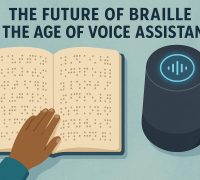
Braille is a crucial tactile writing system widely utilized by individuals who are blind or visually impaired. Originating in the 19th century, it was invented by Louis Braille, a French educator who developed this ingenious method involving raised dots. These dots are strategically arranged in cells consisting of up to six dots each, where individual configurations correspond to specific letters, numerals, or punctuation marks. In recent years, the burgeoning emphasis on accessibility within public spaces has been notably amplified, with airports prominently included in this progressive transformation. Incorporating Braille signage and resources within these facilities not only caters to the needs of visually impaired travelers but also elevates overall accessibility standards.
The Current State of Accessibility in Airports
The evolution of accessibility in airports has witnessed significant advances. Many airports have implemented assorted measures such as ramps for wheelchair accessibility, audible information systems for travelers with hearing impairments, and extensively trained staff to assist those requiring extra help. However, the inclusion of Braille offers a specialized advantage that can play a pivotal role in ensuring that airports cater comprehensively to the visually impaired population.
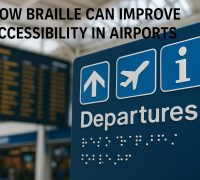
While certain airports have already made strides by embedding Braille into room signs and elevator buttons, there remains substantial scope for further enhancement. Comprehensive Braille integration is essential for crafting a fully inclusive environment where all travelers feel valued and supported.
Benefits of Implementing Braille
The incorporation of Braille within airport ecosystems yields a multitude of benefits, chief among them being the enhancement of navigation and independence for individuals with visual impairments. With clearly delineated Braille signage available for terminal maps, gate numbers, and directional indicators, visually impaired passengers can independently maneuver through the airport premises. This fosters a sense of autonomy, enabling these travelers to traverse the airport landscape with the same ease and confidence as their sighted counterparts.
Moreover, the installation of Braille systems on interactive kiosks facilitates convenient access to flight information and check-in services. This empowers visually impaired travelers, enabling them to engage with the necessary tools and systems without needing assistance from airport personnel, thereby maintaining their dignity and agency.
Another critical advantage involves creating an inclusive experience. By accommodating the needs of visually impaired travelers, airports exemplify a commitment to providing equal access and enriching the travel experience for all passengers. This proactive approach enhances the airport’s reputation, fostering a sense of goodwill and community.
Technological Innovations and Braille
The ever-evolving field of technology offers exciting innovations in integrating Braille within airport settings. The deployment of refreshable Braille displays at information desks exemplifies such technological advancements. These displays provide real-time airport and flight information in Braille, effectively functioning as digital connectivity points accessible to the visually impaired.
Furthermore, airports are beginning to explore cutting-edge solutions such as haptic technology. Leveraging the synergistic capabilities of smartphones, haptic technology guides travelers through the airport by utilizing vibrations and audio cues, thereby supplementing the Braille system. This innovative blend of tactile and auditory feedback ensures that visually impaired travelers can navigate seamlessly, even when traditional Braille touchpoints are unavailable or impractical.
Conclusion and Future Outlook
While the universal inclusion of Braille in airports may still be a nascent concept, strides are being made towards achieving comprehensive accessibility. Airports that prioritize the needs of all travelers, including those with visual impairments, espouse a commitment to inclusivity and equality. Such practices are not merely beneficial but necessary, setting a precedent for other public facilities to emulate.
As technology continues to evolve at an accelerated pace, it is anticipated that further innovations in Braille technology and other supportive systems will bolster these initiatives. The journey towards full accessibility is ongoing, but each step, however small, contributes to a more inclusive and equitable environment. In doing so, airports not only enhance the travel experience for the visually impaired but set a transformative standard for other public spaces. Embracing a future where accessibility is ingrained in the very fabric of public infrastructure promises a world where all individuals can engage with their environment confidently and independently.