How Braille is Used in Religious Texts and Spiritual Practices

Introduction to Braille in Religious Texts

Braille plays an essential role in making religious texts accessible to visually impaired individuals. Developed by Louis Braille in the early 19th century, this tactile writing system enables readers to perceive text through touch. Religious organizations worldwide have embraced Braille, ensuring that sacred scriptures and spiritual literature are available to all followers. This article explores how Braille is used in various religious texts and spiritual practices.

Braille and Christianity

Christianity has a long tradition of translating the Bible into Braille. Organizations such as the American Bible Society and the National Library Service for the Blind and Print Disabled have contributed to producing Braille versions of the Bible. These texts are crucial in allowing visually impaired Christians to engage with scripture independently. Various denominations also offer prayer books, hymnals, and study materials in Braille.

Biblical Studies and Devotional Practices

For visually impaired Christians, Braille provides access not only to the Bible but also to commentaries and Bible study materials. These resources facilitate personal and group studies, enriching spiritual understanding. Additionally, many churches offer Braille versions of their bulletins and announcements, allowing congregants to participate fully in services and community life. The incorporation of Braille into church activities and educational materials enables a more inclusive experience, ensuring that visually impaired individuals can participate in religious discussions and devotions with ease.

Braille plays an instrumental role in the everyday life of a visually impaired Christian believer, allowing them to maintain a personal connection with their faith through daily readings and prayer. The availability of Braille scriptures has empowered individuals to deepen their theological knowledge and maintain active membership in their religious communities, fostering spiritual growth and community integration.

Braille in Islam

In Islam, the Quran is the central religious text, and its accessibility is of utmost importance. Numerous organizations have worked to create Braille versions of the Quran to ensure that visually impaired Muslims can read and memorize the holy scripture. Countries such as Saudi Arabia and Egypt have made significant efforts to produce and distribute Braille Qurans globally.

Supporting Memorization and Recitation

For Muslims, the ability to memorize and recite Quranic verses is an integral aspect of spiritual practice. Braille facilitates this process, enabling individuals to learn, recite, and internalize the Quran’s teachings. In some regions, Islamic schools offer instruction in Braille, supporting visually impaired students in their religious education. The tactile nature of Braille makes it an effective learning tool, helping students engage with the text and gain a deeper understanding of the principles within the Quran.

Furthermore, various charitable organizations and governmental initiatives have been launched to ensure Braille translations are widely available in mosques and educational institutions. These efforts signify the importance of accessibility in preserving the tradition of Quranic memorization and promoting religious education among visually impaired individuals.

Hinduism and Braille

Efforts to make Hindu scriptures available in Braille have been gaining momentum. Sacred texts such as the Bhagavad Gita and the Vedas are being transcribed into Braille, allowing visually impaired practitioners to explore Hindu philosophy and spiritual teachings independently.

Access to Devotional Literature

Beyond scriptures, there is a growing availability of devotional literature in Braille. This includes books of prayers, hymns, and other spiritual writings that are essential for daily worship and personal reflection. Programs within certain temples and organizations focus on producing and distributing these materials. The movement towards making Hindu texts available in Braille reflects a broader commitment to inclusivity within the community.

Temples and Hindu organizations are taking significant steps to ensure that all members of their communities, regardless of visual ability, have equal opportunities to engage in religious activities. Braille materials are often integrated into temple services, providing visually impaired individuals with full access to rituals, chants, and learning opportunities. This holistic approach to accessibility enhances both individual spiritual growth and communal participation.

Buddhism and Braille Scriptures

Buddhist communities have been proactive in making texts like the Dhammapada and various sutras available in Braille. These texts are vital for study and meditation, aiding practitioners in understanding the teachings of Buddha.

Inclusive Meditation Practices

For visually impaired Buddhists, access to Braille scriptures supports meditation practices by facilitating deep engagement with the texts. Many Buddhist centers now offer resources and study sessions specifically designed for visually impaired individuals, contributing to a more inclusive spiritual environment. Regular study sessions, led by knowledgeable instructors, create opportunities for visually impaired practitioners to delve into Buddhist teachings, fostering a supportive learning environment that encourages spiritual contemplation and growth.

Buddhist communities recognize the need for accessible spiritual resources. The distribution of Braille materials ensures that all individuals, regardless of their visual ability, can engage fully with Buddhist teachings and participate in meditation and mindfulness practices, which are core components of Buddhist spirituality.

Conclusion

The use of Braille in religious texts is invaluable in fostering inclusivity and enriching the spiritual lives of visually impaired individuals. By making sacred scriptures and devotional materials more accessible, religious communities worldwide are ensuring that all followers can participate fully in their spiritual journeys. For further exploration of this topic, various organizations offer resources and support for individuals interested in accessing religious texts in Braille.

In conclusion, the integration of Braille into the realm of religious texts signifies a crucial step toward achieving inclusivity and equality within religious communities around the world. This commitment to accessibility empowers visually impaired individuals to engage deeply with their faith traditions, allowing them to explore, question, and grow within their spiritual journeys without the barriers that physical limitations may present.

Religious communities that adopt Braille materials demonstrate a commitment to fostering an inclusive spiritual environment for all their members, ensuring that everyone, regardless of physical ability, is afforded the same opportunities to participate in religious activities and deepen their spiritual understanding. This approach not only enriches the lives of visually impaired individuals but also strengthens the community as a whole, fostering unity, understanding, and mutual respect among all its members.
The Role of Braille in the Postal System

The Importance of Braille in the Postal System

In modern society, the postal system plays a crucial role in facilitating communication and ensuring the delivery of essential items. For individuals who are blind or visually impaired, the integration of Braille within the postal system is an invaluable asset. This article explores how Braille is used in postal services and its impact on enhancing accessibility.

Understanding Braille

Braille is a tactile writing system used by people who are blind or visually impaired. It consists of patterns of raised dots that represent letters, numbers, and punctuation marks. Created by Louis Braille in the early 19th century, this system enables individuals to read through touch, promoting literacy and independence. The development of Braille was a revolutionary step for individuals with visual disabilities, as it opened new avenues for education, personal development, and communication.

The Braille system itself is comprised of cells that have six dot positions, arranged in a rectangle containing two columns of three dots each. Each position can either be raised or flat, allowing for 64 different combinations, including the space. This provides the basis for coding the alphabet, numbers, grammatical markers, and even musical and scientific notation. This functionality has enabled Braille to become a universal tactile writing system used across the globe, transcending language barriers and offering a consistent method for individuals with visual impairments to connect with written content.

Integration of Braille in Postal Services

The use of Braille in postal services has been a significant step towards inclusivity. Various postal services worldwide have adopted Braille to ensure that visually impaired individuals can access their correspondence with ease.

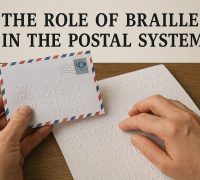
Embossed Braille Labels: Many postal systems offer the option of using embossed Braille labels on envelopes and packages. This service enables recipients to identify their mail without assistance, respecting their privacy and independence. Embossed Braille labels can be applied to letters, packages, and parcels, making it feasible for blind individuals to recognize sender information, and manage their mail without requiring sighted assistance. This builds confidence and autonomy in managing personal correspondence and necessary documentation in their daily lives.

Special Braille Services: Certain countries have implemented specialized postal services for blind and visually impaired individuals. These services often include free postage for Braille materials such as books and letters, ensuring that accessibility does not come at an extra cost. Such initiatives are instrumental in supporting the dissemination of Braille literacy materials and promoting educational and cultural exchange. Providing free or low-cost shipping for Braille materials enhances access to a diverse array of resources, from academic materials to leisure reading, supporting lifelong learning for individuals with visual impairments.

In addition, some postal services have developed dedicated categories or stamped services that allow dispatch of Braille volumes and aids without charge up to a certain weight or size limit. This further encourages the inclusion of people who might otherwise find it financially challenging to obtain Braille books and resources to support their educational needs.

Benefits and Challenges

The inclusion of Braille in the postal system presents several benefits:

Enhanced Accessibility: By providing correspondence in Braille, postal services make communication more accessible for visually impaired individuals. This ensures equitable access to information, which is fundamental to participating in society actively. From a simple letter to official documentation, having content available in Braille allows visually impaired users to fully understand and act upon the information they receive.

Independence and Privacy: Braille labels and correspondence allow individuals to manage their mail independently, preserving their privacy. This independence empowers visually impaired individuals to handle sensitive information discreetly and confidently. It minimizes reliance on others for tasks such as reading bills, understanding medical information, or comprehending legal documents, thus preserving the personal privacy that is an inherent right of every individual.

Promotion of Literacy: Encouraging the use of Braille supports literacy among the visually impaired community. Access to Braille materials broadens educational opportunities and encourages cultural participation. A well-developed Braille infrastructure within postal systems can be instrumental in promoting communicational skills and helping bridge the gap between the visually impaired and their sighted peers. Literacy through Braille also encourages broader employment opportunities and increased inclusion in social, political, and communal activities.

Despite these advantages, some challenges remain:

Cost and Implementation: The production of Braille materials can be more expensive and time-consuming than standard print. This makes it challenging to provide Braille for all types of correspondence, particularly in instances where resources are limited. The intense labor and specific tools required to produce Braille can hinder its widespread availability in some regions, often throttling expansion efforts where economic resources and technology are in shorter supply.

Limited Awareness: There can be a lack of awareness about Braille services available within postal systems, leading to underutilization by eligible individuals. Ensuring wide dissemination of information about these services is crucial. Both public and private stakeholders must engage in campaigns to raise awareness and educate the public about the availability and benefits of Braille mailing options, ensuring that those who require such services are informed and capable of utilizing them effectively.

Conclusion

The integration of Braille into the postal system is a significant stride towards inclusivity and accessibility. By accommodating the needs of people who are blind or visually impaired, postal services help foster independence and equality. The success of Braille’s implementation in the postal framework exemplifies how societies can strive towards more accessible environments by harnessing established systems. However, there is still much to be done to enhance the dissemination and utilization of Braille effectively across various postal systems around the world.

Continued efforts to raise awareness and improve the distribution of Braille materials will further enhance these benefits, ensuring that everyone has equitable access to communication resources. This inclusivity in communication helps forge stronger ties within the community, allows more equal opportunities in education and employment, and improves the quality of life for visually impaired individuals by offering them the freedom to navigate their own lives with autonomy and confidence. As we continue to innovate and expand these services, the role of Braille in the postal system will remain crucial, bridging gaps and ensuring that everyone, regardless of their visual capabilities, can partake fully in the societal exchange of information.

Braille in Fashion: How Clothing Brands Are Incorporating Accessibility

Introduction to Braille in Fashion

In recent years, the fashion industry has taken significant strides towards becoming more inclusive. A notable development in this context is the integration of Braille into clothing designs. This move is aimed at enhancing accessibility for the visually impaired and reflects the industry’s growing awareness of the diverse needs of all consumers, not just those who fit conventional molds.

The Growing Importance of Accessibility in Fashion

The significance of accessibility in the fashion world is being increasingly recognized by various brands as a core component of their business strategies. Accessibility not only enables companies to tap into new market segments but also aligns them with the larger societal movement towards inclusivity. Within this framework, the adoption of Braille on clothing items is becoming paramount, catering specifically to individuals who rely on tactile surfaces to understand their environment effectively.

How Braille is Being Incorporated

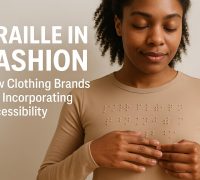
Diverse clothing brands are employing different innovative techniques to incorporate Braille into their garments. Historically, Braille has mostly been applied to clothing tags, offering visually impaired individuals critical information such as the type of clothing, care instructions, and size distinctions. More recently, some brands have advanced this concept by embedding Braille directly into the fabric, often integrating it into the design through patterns or graphics, thereby merging functional contributions with aesthetic appeal.

Innovative Brands Leading the Way

Several forward-thinking brands have emerged as frontrunners in this pioneering area. These include specialized brands producing garments exclusively for the visually impaired and mainstream brands that have integrated Braille into their standard collections. These campaigns not only cater to practical necessities but also significantly raise awareness about visual impairments, hence helping mainstream the conversation on inclusivity within the fashion industry.

Consumer Reception and Challenges

The introduction of clothing featuring Braille has generally received a warm reception, particularly amongst disability advocates who regard it as a crucial stride towards inclusiveness. Nonetheless, there remain several obstacles to overcome. One notable challenge is ensuring the precision and standardization of Braille across garments, which is vital for these pieces to be genuinely beneficial. There are also considerations around the expense of crafting specialized fabrics and implementing tactile prints, which could impede the widespread adoption of such innovative designs.

The Future of Braille in Fashion

As the appetite for accessible fashion grows, it’s anticipated that more brands will initiate efforts to incorporate Braille into their designs. This burgeoning trend promises to stimulate further innovation within technology and design sectors, ultimately making fashion increasingly inclusive. Forming partnerships with organizations that advocate for the visually impaired could be instrumental in elevating the effectiveness of these initiatives, paving the way for a promising future where fashion inclusivity is the norm rather than the exception.

Expanding Market Opportunities

Expanding the market to include visually impaired consumers represents a significant business opportunity. By tapping into this demographic, brands can not only drive sales but also foster a sense of community and loyalty among consumers who feel represented and considered in fashion choices. Companies engaging in such initiatives may find themselves at the forefront of a transformative shift in the fashion landscape, where inclusion becomes a fundamental principle.

Educating Designers and Creators

Educating designers and creators plays a crucial role in ensuring that Braille integrated into fashion achieves its intended purpose. Workshops and training sessions focusing on the intricacies of Braille and the needs of visually impaired individuals can empower designers to create garments that genuinely cater to this community. Understanding the functional aspects of Braille, alongside its aesthetic potential, can lead to more thoughtful and effective design solutions.

Collaborations and Partnerships

Strategic collaborations between fashion brands and organizations that represent the visually impaired can further amplify the social impact of these initiatives. Such partnerships could facilitate feedback from potential users, ensuring that product designs are genuinely useful and accessible. These collaborations might also provide brands with valuable insights into the challenges and experiences of the visually impaired community, fostering a more empathetic approach to design.

Technical Innovations in Braille Fashion

With the advancement of technology, new possibilities for incorporating Braille into clothing are on the horizon. Innovations such as 3D printing and advanced textile production techniques may enable more efficient and cost-effective production of Braille-embedded garments. As technology evolves, the quality, durability, and accessibility of these innovations are likely to be improved, reducing barriers to adoption for both brands and consumers.

Final Thoughts

The progression of Braille in fashion represents a significant leap toward inclusivity, reflecting the evolving dynamics of the modern fashion industry. As brand awareness deepens and consumer demand for accessibility grows, the integration of Braille might soon evolve from a niche initiative to a mainstream practice. By embracing inclusivity, the fashion industry not only expands its market but also moves toward a model where every individual’s needs and preferences can be acknowledged and celebrated through thoughtful design.

How 3D Printing is Changing the Way Braille is Produced

The Impact of 3D Printing on Braille Production

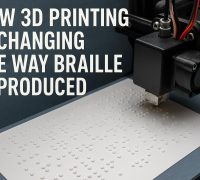
The realm of 3D printing is undeniably transformative, heralding changes across various industries and facets of everyday life. A particularly noteworthy impact is its application in Braille production. Braille, a tactile writing system that aids individuals with visual impairments, has traditionally been produced through methods such as embossing or screen printing. However, the advent of 3D printing heralds a new chapter, introducing numerous advantageous changes to the production and distribution of Braille materials.

Enhanced Accessibility and Customization

The transition from traditional Braille production methods to those incorporating 3D printing technology marks a significant advancement in accessibility and customization. Conventional Braille production methods often require substantial resources, both in terms of time and cost. In contrast, 3D printing facilitates the creation of Braille in a manner that is far less resource-intensive. This reduction in production complexity translates into increased accessibility, allowing more institutions to produce Braille materials tailored to specific needs.

One of the most compelling features of 3D printing in this context is its capacity for producing customized Braille. By design, 3D printing allows for rapid adjustments in the production process, making it feasible to produce bespoke Braille texts adjusted to suit individual requirements. This flexibility is crucial for educational institutions and libraries, which can produce specific materials as needed, thereby ensuring prompt access to essential resources for their users.

Supporting Complex Designs

Besides customization, 3D printing supports the creation of more intricate designs that were previously challenging to produce using conventional methods. This capability is particularly beneficial for the production of tactile maps, diagrams, and various educational tools. The precision offered by 3D printing means that Braille can now be seamlessly integrated into complex designs, significantly enhancing the learning and comprehension experience for visually impaired individuals. These improvements in complexity and detail offer potential users a better understanding of spatial concepts and detailed information, expanding the scope of what can be effectively communicated through Braille.

Cost-Effectiveness and Efficiency

The cost-saving potential of 3D printing represents one of its most attractive qualities. Traditional Braille production often necessitates specialized equipment and can involve significant costs. Conversely, 3D printing allows for the production of Braille without the need for extensive financial investment in specialized resources. This capacity for more cost-effective production opens new possibilities for smaller-scale producers and independent creators, making Braille materials more widely available to those who need them.

Environmentally Friendly Production

In addition to offering cost savings, 3D printing technology holds promise for more environmentally friendly Braille production. Unlike traditional methods, which can generate significant waste, 3D printing optimizes material usage, minimizing waste output. Furthermore, the possibility of using recyclable materials in the 3D printing process aligns with global sustainability initiatives, fostering an environmentally responsible approach to Braille production. This commitment to sustainable practices benefits producers and users alike by supporting a circular economy and reducing the environmental impact of manufacturing.

Future Prospects

Looking ahead, the integration of 3D printing technology in Braille production is poised for continued evolution and enhancement. As advancements in 3D printing technology continue, even more sophisticated and user-friendly solutions for creating Braille materials will emerge. These innovations promise not only to improve the quality of Braille materials but also to expand the range of possibilities for visually impaired individuals in educational and personal contexts.

The ongoing development in this sphere of technology exemplifies the broader potential for 3D printing to bridge gaps in accessibility and promote inclusivity. By democratizing access to information, 3D printing empowers visually impaired communities to engage more fully with the world around them. This democratization represents an important stride toward ensuring that individuals with visual impairments have equal opportunities to access information and participate in society.

In summary, the impact of 3D printing on Braille production is both significant and positive, ushering in a new era of accessibility, customization, and cost-efficiency. As this technology continues to advance, it holds the promise of further enriching the lives of visually impaired individuals by expanding their access to essential resources. The progressive evolution of 3D printing in this context serves as a powerful example of how technological innovations can drive increased inclusivity and opportunity in our society.