
The Importance of Early Braille Education for Blind Children

The Role of Braille in Early Education

Early Braille education plays a crucial role in the academic and personal development of blind children. Unlike other learning tools that rely heavily on vision, Braille offers a tactile method of reading and writing that is integral to literacy for visually impaired students. It is not just an alternative method of communication but a foundational skill that empowers blind children in various aspects of their lives.

Historical Context and Development

Invented by Louis Braille in the early 19th century, Braille has evolved into a standardized system used worldwide. Designed to improve accessibility, it enables blind individuals to read and write through a series of raised dots representing letters, numbers, and punctuation. The system’s simplicity and effectiveness have made it indispensable in educational settings. By allowing blind individuals to have direct access to written material, it bridges the communication gap and provides an equal educational foundation.

Importance for Educational Development

Early exposure to Braille profoundly impacts literacy development, mirroring the role print plays for sighted children. Learning Braille at a young age nurtures an understanding of spelling, grammar, and punctuation. These foundational skills are integral to academic achievement, enabling blind students to engage with a broad array of educational resources. Mastery of Braille lays the groundwork for learning complex subjects, as it allows students to access and comprehend educational content independently.

Moreover, Braille education reinforces concepts that are learned auditorily. This includes subjects like mathematics where tactile representations such as graphs and charts can be explored further. The tactile nature of Braille allows blind students to process and understand information effectively, facilitating a comprehensive educational experience. With the integration of Braille in early education, these students are better poised to excel academically, which paves the way for lifelong learning and development.

Enhancing Social and Emotional Growth

Beyond academic prowess, Braille education significantly influences the social and emotional growth of visually impaired children. Mastery of Braille fosters independence and self-reliance, which are indispensable for building personal confidence and enabling social interactions. Literacy skills attained through Braille allow these children to participate more fully in social activities that require reading, writing, or note-taking, facilitating greater social inclusion.

Furthermore, the confidence gained from Braille proficiency can extend to other areas of a child’s life, enhancing their ability to navigate social networks and environments. The feeling of autonomy derived from reading without assistance instills a sense of empowerment, contributing to positive self-esteem and identity formation. Engaging with Braille from an early age prepares children for the complexities of adulthood, ensuring they develop into well-rounded individuals.

Technological Integration and Future Perspectives

In today’s digital age, the integration of technology with Braille education adds another dimension to its significance. Innovations such as Braille displays and electronic notetakers have expanded the accessibility of digital content, making it easier for blind children to engage with a diverse range of materials. Such technologies not only enhance educational experiences but also ensure that visually impaired students remain active participants in the digital world.

These advancements underscore the enduring relevance of Braille in modern education. As technology continues to advance, it promises further enhancements in accessibility and educational outcomes for blind students. By staying abreast of technological developments, educators can incorporate these tools into their teaching methods, optimizing the learning experience for their students. Such integration not only supports traditional learning but also fosters innovative ways of engaging with educational content.

Promoting early Braille education is essential to shape a more inclusive and equitable educational landscape. Access to resources like the Braille Institute and Perkins School for the Blind offers additional support and information for those interested in this field. These institutions provide not only educational materials but also community support, advocacy, and training for educators, caregivers, and students alike.

In conclusion, early Braille education is far more than learning a different form of communication. It represents an essential early step toward lifelong learning and independence for blind children. By committing to Braille education at an early age, society is investing in the future success and well-being of visually impaired individuals, empowering them to reach their full potential and contribute meaningfully to their communities.

Braille and Tactile Books for Children

Braille and Tactile Books: An Overview

Braille and tactile books play a crucial role in the education and literacy development of children who are blind or visually impaired. These resources provide a means for children to engage with literature in a way that is accessible and meaningful. By giving visually impaired children the opportunity to read and interact with books, these tools lay the foundation for their educational journey and overall personal growth.

The Importance of Braille

Braille is a system of raised dots that can be felt with the fingertips. It represents letters and numbers, allowing those who cannot see to read and write. Braille is not merely a tool but a gateway to independence and empowerment for individuals who are visually impaired. Through Braille, children can access written works, enabling them to communicate effectively and interact with the world of education and beyond.

This system of reading and writing allows young learners to develop literacy skills essential for their cognitive and academic development. The inclusion of Braille in education plans ensures that children with visual impairments are not left without the necessary tools to thrive in a learning environment. Through learning Braille, these children become equipped with a sense of autonomy, allowing them to perform tasks independently and with confidence. For further education on Braille, organizations like the National Federation of the Blind provide comprehensive resources.

Tactile Books: Enhancing Experiences

While Braille focuses predominantly on reading and writing, tactile books incorporate additional elements that broaden the learning experience. These books include various textures, shapes, and often interactive components that children can physically explore. When engaging with tactile books, children use their sense of touch to understand different concepts, such as size, shape, and spatial relationships.

This multi-sensory approach is particularly effective in teaching abstract concepts and enhancing cognitive development. Tactile books allow children to become more aware of the world around them by engaging in a hands-on learning process. By interacting with real-life textures and representations, children can form mental images and better understand the literature presented to them. This immersive reading experience ensures that their learning is not only effective but also enjoyable and enriching.

Advantages of Braille and Tactile Books

Braille and tactile books have distinct advantages that make them invaluable resources for visually impaired children:

Accessibility: Braille and tactile books provide access to literature for children who may otherwise face barriers. They ensure educational inclusivity and allow children to engage with stories, lessons, and information that are key to their learning.

Educational Development: Regular use of Braille and tactile books fosters literacy and comprehension skills. As children interact with these materials, they develop a deeper understanding of language and writing, setting a strong foundation for future academic success.

Sensory Engagement: By incorporating multiple senses, these books offer a more immersive reading experience. Sensory engagement not only promotes learning but also enhances retention and comprehension of the material.

Production and Availability

Producing Braille and tactile books requires specialized equipment and expertise. The intricate nature of their design makes them more expensive to produce compared to conventional books. Organizations such as the American Printing House for the Blind (APH) strive to increase availability and reduce costs, making these valuable resources accessible to families and educational institutions.

Efforts to support production often involve collaborations with experts in tactile design and literacy. This collaboration ensures that the books meet high standards of quality and usability while remaining affordable. By improving production techniques and investing in technology, these organizations work tirelessly to ensure that more children can access these essential educational tools.

Challenges in Distribution

One primary challenge in the distribution of Braille and tactile books is the limited production scale. Due to the specialized requirements and costs associated with producing such materials, the availability of these books is not as widespread as needed.

Efforts to overcome these challenges are ongoing. Partnerships with publishers and technological advancements in embossing and tactile design are paving the way for increased production capabilities. By adopting innovative techniques and leveraging new technology, stakeholders in the field aim to improve distribution networks, ensuring that more children have access to these valuable resources.

Conclusion

Braille and tactile books are indispensable tools for the visually impaired community, particularly when it comes to educating children. They not only support literacy but also enhance cognitive development through interactive learning. The role of these books in the educational landscape cannot be overstated, as they provide a means for visually impaired children to access knowledge, cultivate skills, and foster personal development.

Continued advocacy and innovation in this field are vital to ensure wider access and availability for those in need. By prioritizing the availability and quality of Braille and tactile books, educators and advocates can contribute to a more inclusive and equitable world for children who are blind or visually impaired. Ongoing efforts to advance this cause will undoubtedly benefit future generations, allowing visually impaired individuals to not only learn effectively but also to thrive in their broader communities.

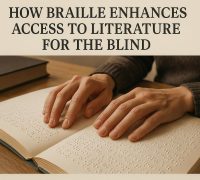
How Braille Enhances Access to Literature for the Blind

The Importance of Braille in Accessing Literature

The significance of Braille in providing access to literature for individuals who are blind or visually impaired cannot be overstated. As a tactile writing system, Braille empowers people to read books and other written materials independently. This independent access fosters a deeper connection to the literary world, enriching the lives of those who use it.

Understanding the Braille System

The Braille system is an intricate arrangement of raised dots organized in cells of up to six or eight configurations. Each cell corresponds to specific letters, numbers, punctuation marks, or even entire words, depending on their configuration and arrangement. Developed by Louis Braille in the 19th century, this ingenious system allows blind individuals to read by touch, thereby transforming the way literature is accessed by the visually impaired.

Learning Braille

Acquiring proficiency in Braille is akin to learning a new language. It necessitates practice, dedication, and patience. Individuals typically start with the basic alphabet and numerals before progressing to more advanced Braille code systems. Mastering Braille opens up vast opportunities for accessing a wide variety of literature and educational materials, making the learning process an invaluable investment in personal and educational development.

Impact on Literacy and Education

For those who are blind, learning Braille is a cornerstone for achieving literacy. It is not merely about being able to read; it’s about having the ability to access textbooks, academic journals, and study materials. This capability empowers students to engage fully in educational settings, allowing them to participate on equal footing with their sighted peers. Through Braille-equipped devices and publications, students can pursue their academic goals without hindrance.

Supporting Lifelong Learning

Beyond the boundaries of formal education, Braille supports lifelong learning by opening doors to a vast array of literary genres. This encompasses novels, poetry, non-fiction, and other works, encouraging individuals to explore and indulge in their personal interests. Libraries specializing in Braille, such as the Perkins Library, offer comprehensive collections of Braille books and materials, fostering an environment of continuous learning and curiosity.

Technological Advancements

Recent technological advancements have significantly broadened the ways in which individuals interact with Braille. For instance, electronic Braille readers and displays provide dynamic methods of accessing digital content, from e-books to online resources. The advent of refreshable Braille displays has further bridged the gap between traditional printed materials and the modern digital landscape.

Enabling Greater Access

The integration of Braille with digital platforms has dramatically increased the availability of literature and information. This ensures that individuals who rely on Braille as their primary means of reading can actively participate in the digital world. They can access up-to-date content and engage with a global community of readers, thus becoming part of a broader cultural conversation.

Conclusion

In conclusion, Braille remains an essential tool for unlocking access to literature and fostering a rich reading experience for those who are blind. Its ability to enable independent reading transforms lives by providing access to knowledge and culture. As Braille continues to evolve and integrate with emerging technologies, the possibilities for expanding the horizons of readers only grows richer. This holds the promise of opening new pathways to learning and cultural engagement, ensuring that the world of literature remains inclusive and accessible to all.

Ultimately, the continued support and innovation in Braille technology are paramount to maintaining its relevance and effectiveness in the modern world. Advocating for Braille literacy and ensuring that educational institutions have adequate resources not only empowers individuals but also enriches society by acknowledging the diverse ways in which people interact with and contribute to the world of literature.

The future of Braille is promising, with the potential to further break down barriers and make literature accessible to an even larger audience. As we move forward, the commitment to preserving and advancing this vital literacy tool will play a crucial role in shaping an inclusive literary culture.

The Use of Braille in Art and Creativity

The Intersection of Braille and Art

The incorporation of Braille into artistic endeavors represents a significant and innovative approach that fundamentally broadens the accessibility and inclusivity of the art world. Braille, a tactile writing system primarily used by blind and visually impaired individuals, consists of patterns of raised dots. Originally developed for reading and writing, its application has traditionally been limited in scope. However, contemporary artists have begun to explore and extend its unique features into the realm of art and creativity, opening exciting new avenues for expression and communication.

Enhancing Accessibility

One of the primary benefits of incorporating Braille into art is the enhancement of accessibility for individuals who are blind or visually impaired. This innovation ensures that art appreciation transcends visual engagement to include experiences that are tactilely meaningful. By integrating Braille into different forms of art, including painting and sculpture, artists can convey messages that resonate on multiple sensory levels, crafting a more inclusive viewing experience. This inclusivity allows a broader audience to interact with and appreciate art, bridging the gap often faced by visually impaired individuals.

Art, in traditional contexts, has largely been an ocular experience. Paintings, photographs, and sculptures cater predominantly to those who can see and interpret visual cues. The integration of Braille challenges this norm, paving the way for art experiences that are not solely dependent on sight. It invites people to engage with art through touch, thereby democratizing the experience and ensuring it is more universally welcoming.

Techniques and Media

A variety of techniques and media have been employed by artists seeking to incorporate Braille into their work, each offering its unique set of challenges and possibilities. For example, some artists choose to create tactile sculptures with Braille directly embedded into the material. This technique allows individuals to ‘read’ the sculpture with their fingers, bringing a dual sensory experience where the tactile complements the visual or, in some cases, replaces it altogether.

Others design intricate paintings that seamlessly incorporate Braille alongside visual imagery. This approach enables viewers to engage with the piece in multiple ways, either by interpreting the visual aspects or by feeling the Braille dots to understand the content. The rise of advanced technologies, such as 3D printing, has further facilitated artists in creating sophisticated and precise Braille patterns as part of their artworks. This technological assistance allows for greater creativity and precision, expanding the potential for artworks that are as insightful as they are accessible.

Beyond Accessibility: Braille as an Art Form

While enhancing accessibility is a critical objective, Braille itself is progressively recognized as a legitimate form of artistic expression. Artists are starting to explore the structured patterns of Braille to delve into themes of communication, perception, and the barriers these create or dissolve. By experimenting with the visual and tactile elements that Braille offers, these artists challenge traditional notions of aesthetic boundaries.

By juxtaposing Braille text with visual imagery, they invite viewers to reflect on the relationship between language and art. This exploration often raises profound questions about how language shapes our understanding and appreciation of art and how art can convey narrative and emotion beyond the limitations of sight.

Notable Artists and Projects

Several artists have been at the forefront, pioneering the integration of Braille in their creative works. These artists, through their innovative practices and projects, have illustrated the immense potential of Braille as both an artistic medium and a means of societal change.

Projects like The History Darkroom create tactile art pieces that exemplify how Braille can be used to build inclusive and thought-provoking art. These works engage diverse audiences by providing layers of meaning that encourage both contemplation and inclusiveness. In a similar vein, The Braille Institute has actively collaborated with different artists to develop works incorporating Braille in inventive ways. These collaborations emphasize the commitment to creating artworks that are accessible while pushing the boundaries of traditional art forms.

Challenges and Considerations

Despite its potential, the use of Braille in art also presents unique challenges. One significant consideration is ensuring that the Braille used is accurate and legible to effectively serve those who rely on it. This often requires artists to possess a firm understanding of the Braille system and collaborate with experts to confirm the correctness of their works.

In addition, there is a need for education among sighted audiences. Appreciating art that incorporates Braille requires an understanding of the context and the significance behind the tactile elements. This necessitates ongoing efforts in education to enhance societal comprehension of Braille, beyond its functional use to include its artistic implications.

The Future of Braille in Art

As awareness of the importance of inclusivity and accessibility continues to grow, the use of Braille in art is likely to expand even further. Artists are continually experimenting with Braille, pushing boundaries and exploring new creative possibilities that were previously unimaginable.

This evolving trend stands to enrich the world of art, ensuring its cultural landscape becomes a tapestry of diverse experiences and expressions. The incorporation of Braille not only fosters a culture of inclusivity but also strengthens the resolve to create environments where art can be a shared experience for all, regardless of physical or sensory abilities.

The future heralds a promising journey for the intersection of Braille and art, one that invites us to rethink who art is for and how it can be experienced and appreciated across the spectrum of human perception. While challenges remain, the potential for art to be a meaningful experience for everyone is a pursuit worth striving for. The ongoing dialogue between artists, communities of blind and visually impaired individuals, and the society at large holds the promise of a richer, more inclusive horizon where art is no longer the exclusive possession of the sighted, but a shared social and cultural endeavor.

The Importance of Braille for Emergency Preparedness

The Essential Role of Braille in Emergency Preparedness

Emergency preparedness is crucial for ensuring the safety and well-being of individuals and communities during unexpected crises. For individuals who are visually impaired, the use of Braille in emergency preparedness can be a vital tool for survival and effective communication during such situations. This document will explore the many facets of how Braille serves this critical function in emergency scenarios.

Understanding Braille

Braille is a tactile writing system that empowers visually impaired individuals to read and write through touch. This system uses arrangements of raised dots arranged in cells, each cell accommodating up to six dots. The configuration of these dots represents different letters, numbers, and even entire words or phrases. As a communication medium, Braille allows those with limited or absent vision to access textual information in a manner that they can engage with independently and effectively.

Practical Applications in Emergency Situations

During emergencies, clear and accessible information is indispensable for ensuring safety. While emergencies create high-pressure scenarios that demand quick, decisive actions, individuals who are visually impaired might experience unique challenges in accessibility and communication. The integration of Braille into emergency preparedness strategies is thus essential. Braille can be utilized to relay essential instructions and updates specific to the situation at hand, such as evacuation routes, emergency contact numbers, or even first aid procedures. For example, an emergency kit could incorporate Braille-encoded lists of contents alongside instructions for usage, enabling visually impaired individuals to quickly identify and utilize the resources necessary for survival and safety.

Enhancing Communication

The ability to communicate effectively can mean the difference between life and death during emergencies. By incorporating Braille into emergency preparedness protocols, individuals who utilize Braille can achieve a level of independence that facilitates urgent understanding and adherence to critical directives without reliance on others. This capability endorses both empowerment and autonomy, resulting in potentially reduced response times during an emergency and enhancing the overall efficacy of emergency measures.

Implementing Braille in communication means labeling emergency exits, creating tactile guides for navigation, and ensuring that instructional manuals and brochures are produced in Braille, among other strategies. The goal is for visually impaired individuals to possess and access the same level of information as everyone else, able to respond swiftly and intelligently to emergency demands.

Challenges and Solutions

The introduction of Braille into emergency preparedness plans is not without its challenges, though many of these are not insurmountable. A significant hurdle is the limited availability of Braille materials. Producing Braille can entail both time and financial costs—elements that may limit widespread distribution. However, partnerships with organizations dedicated to accessibility can significantly alleviate these barriers. These organizations often play a crucial role in facilitating the distribution of materials by either lowering production costs or providing complementary resources.

Efforts are being made worldwide to address these challenges and improve availability. Many organizations, including non-profits and governmental bodies, actively work to increase accessibility to Braille resources. They aim to distribute these resources broadly to ensure that all individuals requiring them have ready access.

One promising development in this area is the growing interest in digital technology to produce Braille at a reduced cost. Digital Braille displays, for instance, offer a means of accessing dynamic and updated information that can be essential in real-time emergency scenarios. These developments, combined with support from networks like the Braille Network Organizations, continue to enhance the level of preparedness and accessibility for visually impaired individuals worldwide.

Broader Implications

The integration of Braille into emergency preparedness strategies bears implications that extend beyond mere practical necessity—it represents a commitment to inclusivity and equity. By ensuring that critical information is disseminated in a manner accessible to everyone, emergency planners can promote a sense of security and autonomy for individuals who might otherwise be marginalized or underserved.

Moreover, awareness of and adherence to inclusive practices like these can foster broader societal acceptance and support for the visually impaired community. Such measures contribute to dismantling barriers in other areas, paving the way for full participation in economic, social, and cultural life.

Conclusion

In conclusion, the integration of Braille into emergency preparedness plans is an essential step toward both inclusivity and safety for the visually impaired community. The ability to access critical information autonomously allows individuals to act decisively and independently in emergency scenarios, thus enhancing their personal security and the effectiveness of emergency responses overall. As we progress in our technological capabilities and societal awareness, fostering the integration of Braille into emergency plans reflects both a commitment to safety and a deeper understanding of accessibility. As more organizations and individuals acknowledge the vital role that Braille plays in preparedness, society moves towards a future where no one is excluded from essential safety information.

How Braille is Incorporated into Public Maps and Directories

The Importance of Braille in Public Spaces

Incorporating Braille into public maps and directories represents a significant leap forward in making public spaces more accessible for individuals with visual impairments. Braille, a tactile writing system, allows these individuals to read text through touch, thereby enhancing their ability to navigate independently. This inclusion is indispensable in promoting inclusivity and equality in accessing public services and amenities for everyone.

Implementation of Braille in Public Maps

The thoughtful integration of Braille on public maps involves addressing a myriad of logistical and practical considerations. Due to its tactile nature, the information presented must be both simplified and strategically detailed. Typically, maps are adjusted to accentuate key landmarks and essential information amenable to easy tactile interpretation. The aim is to strike a careful balance between clarity and comprehensiveness. Public spaces such as transportation hubs, educational institutions, and government buildings are frequently prioritized for the implementation of Braille maps.

Furthermore, the tactile attribute of Braille demands the use of durable materials, which is imperative to preserve the integrity of the information over time. These materials, intended to endure regular use, need to ensure the enduring legibility of raised lettering and symbols so that the information remains easily discernible to users.

Advantages and Challenges

The principal advantage of incorporating Braille into public maps and directories lies in the empowerment of individuals with visual impairments, affording them greater independence. With Braille, they gain the ability to ascertain their current locations, determine potential routes, and locate points of interest without relying on extraneous assistance. This autonomy significantly enhances the overall quality of their navigational experience.

Despite these advantages, challenges abound in the implementation process. The production and subsequent installation of Braille maps can involve considerable expenses, attributable to the specific materials and design requirements. Moreover, there is the persistent challenge of ensuring that these maps are kept current, reflecting any changes within the environments they depict.

Technological Innovations

Technology plays a pivotal role in augmenting the usability of Braille in public maps and directories, potentially transcending some of the inherent challenges. With advancements in tactile map production technologies, such as 3D printing, it has become easier to create detailed maps with enhanced precision. This technology not only promises to mitigate costs but also contributes to generating more accurate representations of physical spaces.

In addition, fusing Braille with digital technologies harbors opportunities to expand accessibility further. For instance, tactile displays and electronic directories equipped with audio feedback systems can act in concert with Braille to deliver comprehensive navigation solutions. Such technological amalgamation ensures that individuals can access information through multiple sensory inputs, optimizing their navigational experiences in public spaces.

Conclusion

The integration of Braille into public maps and directories is not merely an accommodation but a fundamental step towards inclusivity. While various challenges must be addressed, advancements in technology coupled with an unwavering commitment to accessibility can effectively overcome these hurdles. Public spaces that thoughtfully accommodate the needs of individuals with visual impairments actively contribute to building a more inclusive society. Such a society ensures that everyone, irrespective of their abilities, can navigate with confidence and assurance. For further insights into accessibility initiatives, one might explore resources provided by organizations devoted to supporting individuals with visual impairments or the thoughtful design of public spaces.

Braille and the ADA (Americans with Disabilities Act)

Braille and the ADA: An In-Depth Exploration

The Americans with Disabilities Act (ADA), enacted in 1990, is a significant civil rights law aimed at prohibiting discrimination against individuals with disabilities. Among its numerous provisions, the ADA places great emphasis on the importance of accessibility, which includes modes of communication such as Braille. This article delves into the significance of Braille within the scope of activities mandated by the ADA, addressing the broader context of accessibility and its implementation challenges.

The ADA’s Provisions for Accessibility

The ADA is a comprehensive law covering various public and private domains. These include elements like employment, public accommodations, transportation, and telecommunications. The law mandates reasonable modifications to ensure that persons with disabilities have access to the same services and opportunities as individuals without disabilities. A central component of this mandate is ensuring effective communication, which includes providing information in formats accessible to individuals with disabilities.

The act requires covered entities to make necessary changes to practices and policies to accommodate individuals with disabilities effectively. This obligation is not merely confined to structural changes but extends to ensuring that communication, in whatever form, can be received and understood by those with visual impairments. Facilitating such communication is a fundamental responsibility under the ADA, aiming to eliminate barriers and promote equality.

The Importance of Braille

Braille is a tactile writing system widely used by individuals who are blind or significantly visually impaired. It consists of patterns of raised dots that are interpreted by touch, enabling individuals who cannot rely on print materials to access written content. Under the provisions of the ADA, providing materials in Braille is recognized as a critical measure for making written information accessible to those who are visually impaired.

ADA Requirements for Braille

While the ADA does not exclusively mandate Braille as the singular format for accessible documentation, it does emphasize the necessity of effective communication. As such, entities covered by the ADA are obliged to provide Braille materials when requested or when it is apparent that such formats are necessary for effective communication. Here are some situations where Braille requirements are particularly pertinent:

Public Accommodations: This includes businesses and non-profit organizations offering goods or services to the public. Such entities must ensure that individuals with visual disabilities can effectively access their services and products. This might mean providing brochures, menus, or instructional materials in Braille.

Employment: Employers are required to make reasonable accommodations for their employees, which includes offering training materials, manuals, or job-related documentation in Braille for employees who rely on this format to engage effectively with written content.

Braille in Public Spaces

Beyond textual materials, the influence of the ADA extends to the use of Braille in public spaces. Signage is a crucial area where Braille’s application is mandated under the ADA Standards for Accessible Design. Examples include building directories, elevator controls, restroom signs, and other essential navigational aids. Incorporating Braille in these areas ensures that individuals with visual impairments can navigate public spaces independently and securely.

The presence of Braille on signage reassures visually impaired individuals of their ability to interact with and interpret the environment around them without assistance. This autonomy is a critical aspect of the ADA’s objectives, aspiring to foster inclusivity and reduce dependency on others for fundamental navigation.

Challenges and Considerations

Despite the advancements prompted by the ADA, there are enduring challenges in achieving full accessibility. Not all materials are readily available in Braille, and the production of Braille resources can be both time-consuming and costly. Additionally, the variety in the use of Braille presents another challenge; not all individuals with visual impairments are proficient in reading Braille. For some, alternative formats such as audio recordings or digital formats—accessible PDFs and screen-reading software—are more practical or preferred solutions.

Organizations are often tasked with evaluating the most effective way to provide information in a manner that meets the diverse needs of their audience. This requires a nuanced understanding of the available technology, resources, and the individual preferences of users with disabilities.

Resources and Further Reading

Entities looking to ensure ADA compliance regarding Braille usage can find numerous resources online. Organizations specializing in disability rights and accessibility provide detailed guidelines, case studies, and strategies on tailoring environments and services to meet ADA requirements. These resources are invaluable for understanding not only how to comply with existing laws but also how to implement best practices that anticipate future needs and changes in technology.

In conclusion, while the ADA has significantly advanced accessibility, understanding and implementing its requirements for communication, such as through Braille, is a dynamic and ongoing effort. Effective inclusivity requires an ongoing commitment to awareness and adaptation, ensuring that individuals with visual impairments can fully engage with the world around them. This commitment to accessibility enriches communities by fostering environments where every individual can participate and contribute equitably. As society progresses, continuous efforts and innovations will be essential in crafting a world where accessibility in communication is not just a mandate but a universally achieved norm.

The Role of Braille in Inclusive Education

The Importance of Braille in Inclusive Education

The importance of Braille in fostering inclusive education cannot be overstated. As a tactile writing system, Braille enables individuals who are visually impaired to achieve literacy, empowering them to engage fully in reading and writing activities. This empowerment not only supports their academic growth but also enhances their social integration within society.

Understanding Braille

Braille, conceived by Louis Braille in the early 19th century, is instrumental for individuals who are blind or have significant visual impairments. It uses a system of raised dots, arranged in various patterns within each cell, to represent different characters such as letters, numbers, and punctuation marks. This tactile system facilitates independent access to information. Its application is crucial in fields where visual symbols are heavily used, such as in mathematics, scientific disciplines, and music.

The Educational Advantage

Gaining literacy skills through Braille forms a cornerstone for educational success. By learning to read and write using Braille, students can effectively engage with educational materials such as textbooks, take comprehensive notes, and perform academic tasks equivalent to their sighted classmates. Achieving proficiency in Braille is not just an educational triumph; it lays a robust foundation for further professional development and lifelong learning.

Bridging the Gap with Technology

The amalgamation of Braille with modern technology has significantly widened the horizons for education. Contemporary devices like Braille displays and notetakers enable students to interact with digital content seamlessly. Moreover, various assistive technologies, including screen readers and Braille embossers, bolster this interaction, making information more accessible and classroom participation more viable. This technological convergence is crucial for ensuring that students who are blind or visually impaired can keep pace with the rapid advancements in curricular content.

The Role of Educators and Policy

Educators are vital players in successfully integrating Braille into educational settings. Ensuring that teachers receive proper training and have access to ample resources is essential to meet the learning requirements of visually impaired students effectively. Similarly, educational policies should prioritize the promotion of Braille, alongside ensuring the availability of Braille materials and access to necessary technological tools. Schools and various organizations must collaboratively strive to foster an inclusive learning environment.

Braille remains fundamental in the pursuit of inclusive education for students who are blind or visually impaired. It serves as a bridge to literacy, facilitating academic success and fostering independence among these students. Ongoing advocacy for Braille literacy, bolstered by technological advancements and supportive policies, is crucial in ensuring that education is both inclusive and equitable for everyone.

Exploring the Cultural Impact of Braille

Beyond its educational significance, Braille has considerable cultural implications. It has helped cultivate a sense of identity and community among visually impaired individuals. Braille enables independent exploration of literature, allowing blind and visually impaired people to access novels, poetry, and nonfiction works as readily as sighted individuals. This independent access fosters a greater appreciation for culture and arts, allowing deeper personal engagement and understanding.

The Socio-Economic Implications

Braille literacy also plays an essential role in socio-economic inclusion. By enabling academic success, Braille opens doors to higher education opportunities and, subsequently, to diverse career paths. A well-rounded education equips visually impaired individuals with skills that significantly enhance employability, helping them contribute positively to society and gain economic independence.

Moreover, workplaces that embrace Braille and related technologies become more inclusive, enabling organizations to harness diverse talents and perspectives. This inclusivity can catalyze innovation and drive business success, demonstrating the broader societal benefits of promoting Braille literacy within educational frameworks.

Challenges to Braille Literacy

Despite its importance, the dissemination and implementation of Braille face several challenges. In some regions, there is a scarcity of resources required for producing Braille materials. This shortage can hinder students’ access to necessary textbooks and educational resources, thereby affecting their academic progress. Furthermore, misconceptions about Braille and its relevance in the digital age sometimes result in underinvestment in Braille education.

Addressing these challenges requires sustained advocacy, investment, and strategic policy implementation. By recognizing Braille as a dynamic and essential tool for education rather than an outdated system, stakeholders can work together to enhance its accessibility and relevance in modern educational settings.

Looking to the Future

The future of Braille in inclusive education looks promising, particularly as technology continues to evolve. Innovations in tactile displays and digital Braille readers are poised to revolutionize how visually impaired students engage with educational content. These advances promise to make Braille more versatile and adaptable, further integrating it into mainstream educational systems.

Additionally, the growing awareness of disability rights and inclusive practices contributes to a supportive environment for promoting Braille literacy. As society moves towards greater inclusivity, educational institutions, policymakers, and communities must remain committed to advocating for and integrating Braille education into broader educational strategies.

Ultimately, a strong commitment to Braille literacy, supported by technology and thoughtful policy, will ensure that visually impaired students continue to receive the quality education they deserve. By fostering environments where Braille is embraced and encouraged, society can unlock the true potential of all its members, resulting in a more inclusive, equitable, and enriched world for everyone.

The Differences Between UEB (Unified English Braille) and Older Braille Systems

Introduction to Braille Systems

Braille is an essential communication system for individuals who are visually impaired, enabling them to read and write through tactile sensing. Developed in the early 19th century by Louis Braille, the method transforms written language from visual symbols into raised dots that can be felt by fingertips. Over the years, braille has evolved, with various adaptations to cater to different languages and regions. One key advancement in recent times is the introduction of Unified English Braille (UEB), designed to streamline the use of braille across various English-speaking countries. This article delves into the implications and transformative effects of UEB, providing an in-depth understanding of its significance.

The Aim of Unified English Braille (UEB)

Unified English Braille was developed with the primary aim of creating a more cohesive and standardized reading system for individuals who rely on braille. As the use of written and digital English rapidly evolves, a consistent braille system helps ensure that readers can navigate this expanding body of content without the confusion that regional variations might cause. By establishing uniformity, UEB aims not only to simplify reading and writing but also to provide accuracy and clarity in more complex contexts, such as conveying mathematical and scientific information.

Key Differences Between UEB and Older Braille Systems

Although UEB builds on the essential features of traditional braille, it introduces several strategic changes aimed at enhancing comprehensibility and function.

Contractions: One of the primary features of braille that differ from printed text is its use of contractions – single cells that represent common groups of letters or entire words. In older systems, these contractions could vary widely and were sometimes confusing, especially for new learners. UEB has revised many of these contractions, striking a balance between brevity and ease of understanding. By reducing contractions that served as stumbling blocks for readers, UEB fosters a more intuitive and effective learning experience.

Symbols: Earlier braille systems often contained symbols that bore little resemblance to their print counterparts, leading to possible misinterpretations. UEB addresses this by aligning braille symbols more closely with print conventions. The system includes distinct symbols for modern punctuation marks, mathematical operators, and even web addresses. This connection to print allows UEB users to more accurately grasp the context and meaning of a text, which is particularly vital in the digital age where information formats can vary widely.

Formatting: The formatting rules under UEB have been revised to better reflect typical print form. This includes explicit guidelines for the use of capital letters, a concept not clearly delineated in previous systems. The consistent application of such formatting rules ensures coherence, making braille texts easier to comprehend and use for educational and personal purposes.

Implications for Users and Educators

The transition to UEB has substantial implications for both users and educators deeply embedded within the landscape of braille literacy.

For new braille learners, UEB offers a more straightforward and seamless learning process. By aligning closely with contemporary educational resources, UEB integrates effortlessly into teaching curriculums designed for visually impaired students. This coherence provides a unified learning pathway that can be easily followed.

Educators and seasoned braille readers might initially find the transition to UEB more challenging. However, the transition is facilitated by comprehensive training programs and updated educational materials to help them adapt efficiently. As UEB becomes widely adopted, it becomes crucial for professionals working with visually impaired individuals to be well-versed in the new standard to effectively support their students.

The Role of Technology in UEB Adoption

In today’s digital age, technology significantly bolsters the adoption of UEB. Digital platforms and software have been developed to produce braille content seamlessly, with many refreshable braille displays and screen readers now programmed to recognize UEB. This technological advancement ensures that digital texts accurately reflect the new standards of braille, allowing for consistent communication and access to information across devices. This seamless integration is pivotal for braille readers, enabling them to interact with a wide range of digital content in a meaningful way.

Conclusion

The shift from older braille systems to Unified English Braille represents a critical step forward in the pursuit of a standardized reading and writing system for the visually impaired. Although the transition may pose challenges, the benefits of adopting UEB are immense. By providing a more consistent, clear, and modernized approach to braille, UEB enhances the ability to accurately reflect contemporary written English. This is especially important in both digital and educational environments, where a standardized system can vastly improve learning and communication outcomes. By embracing this change, the visually impaired community gains access to a world of information that is both richer and more inclusive. As technology continues to evolve, UEB ensures that braille readers are equipped with the tools needed to navigate this ever-changing landscape effectively.

The Impact of Smart Braille Devices on Accessibility

The Evolution of Braille Technology

In an era where technology continually reshapes the boundaries of possibilities, recent advancements have profoundly enhanced accessibility for those with visual impairments. One of the prime beneficiaries of these tech innovations is the realm of Braille technology, which serves as a critical communication tool for individuals who are blind or have low vision. Traditional Braille, conceived in the 19th century by Louis Braille, marked a revolutionary step forward, allowing tactile literacy through embossed dots. Fast forward to today, and we observe a remarkable evolution as technological progress continues to redefine the means and methods by which Braille is read and written.

What Are Smart Braille Devices?

Smart Braille devices stand at the forefront of this technological evolution. Utilizing cutting-edge technology, these devices translate digital text into the tactile language of Braille, making digital information accessible in ways previously unimaginable. The range of smart Braille devices varies widely, from portable refreshable Braille displays to comprehensive Braille tablets, each offering unique functionalities tailored to meet specific user needs. By incorporating digital connectivity, these devices empower users to delve into electronic documents, explore the web, and even interact on social media platforms, all through the familiar touch of Braille.

Features of Smart Braille Devices

Smart Braille devices are a tapestry of innovative features designed to optimize accessibility and user experience:

Refreshable Braille Displays: The hallmark of such devices is the refreshable Braille display, which allows users to read ever-changing content by updating Braille characters in real-time as they navigate through texts, whether they are books, emails, or any other digital content.

Compatibility with Multiple Formats: Modern smart Braille devices boast versatility in handling various file formats and the capability to connect with other digital gadgets. This adaptability means a seamless transition between different media and platforms, enhancing convenience and accessibility.

Interactive Touch Interfaces: Some advanced models include touch-screen interfaces that enrich user interaction, making the experience more coherent and intuitive as they engage with digital content.

The Impact on Accessibility

The advent of smart Braille devices has ushered in a new era of accessibility, providing unprecedented opportunities for independence and engagement for the blind and visually impaired. By seamlessly weaving digital and tactile information, these devices offer users a newfound level of autonomy, significantly enhancing their ability to actively participate in various aspects of life.

Improved Educational Opportunities

Education, a cornerstone for personal and professional development, has seen a revolutionary transformation owing to smart Braille technology. Visually impaired students now have access to an expansive library of educational resources, from digital textbooks to scholarly papers, significantly broadening their horizons and learning experiences. This access ensures a more inclusive educational environment, where students can engage with materials on par with their sighted peers.

Increased Employment Potential

Employment landscapes have also been reshaped by the capabilities of smart Braille devices. Equipped with tools that facilitate interaction with standard office software, users can read emails, draft documents, and participate in professional learning initiatives. This technological empowerment opens up new career avenues and enhances employability prospects for visually impaired individuals, allowing them to contribute effectively in diverse occupational settings.

Social Connectivity

The ability to communicate and maintain social connections is vital for a fulfilling life. Smart Braille devices, with features supporting online communication platforms, provide a conduit for users to stay in touch with family and friends, nurturing a sense of community and enabling active participation in social activities. This connectivity mitigates the isolation often experienced by individuals with visual impairments, fostering engagement and interaction within broader societal contexts.

Challenges and Considerations

Despite the multitude of benefits heralded by smart Braille devices, certain challenges and considerations warrant attention. Paramount among these is the pricing of such specialized technology, which can be prohibitively high for many potential users. As these devices incorporate intricate and specialized components, the production costs are elevated, translating into higher market prices.

Moreover, the introduction of new technology invariably brings a learning curve. Mastering these devices may require dedicated training and support, posing an additional hurdle for users unfamiliar with the latest tech advancements. These challenges underline the need for comprehensive support systems and accessible training to ensure users can fully capitalize on the benefits of smart Braille devices.

Efforts to Address Accessibility Challenges

Numerous organizations and initiatives are actively working towards bridging the gap in accessibility. Efforts to reduce costs often focus on developing more affordable alternatives without compromising functionality. Additionally, advocacy for subsidized pricing through government assistance programs aims to make these vital resources more attainable for a larger demographic. As these efforts gain momentum, the potential for broader access and utilization of smart Braille technology becomes increasingly achievable.

Conclusion

In conclusion, smart Braille devices epitomize a significant technological advancement that underpins enhanced accessibility for the blind and visually impaired. By unlocking new pathways to information access, supporting educational endeavors, and boosting employment opportunities, these devices are instrumental in fostering comprehensive participation in society. As concerted efforts continue to lower costs and increase device accessibility, the vision of an inclusive world where everyone can engage with information seamlessly comes closer to fruition.

For more information about smart Braille technology and ongoing accessibility initiatives, please visit organizations like the American Foundation for the Blind or the Royal National Institute of Blind People.